A book · A documentary · A choice
«A project of responsibility toward those we don't understand»

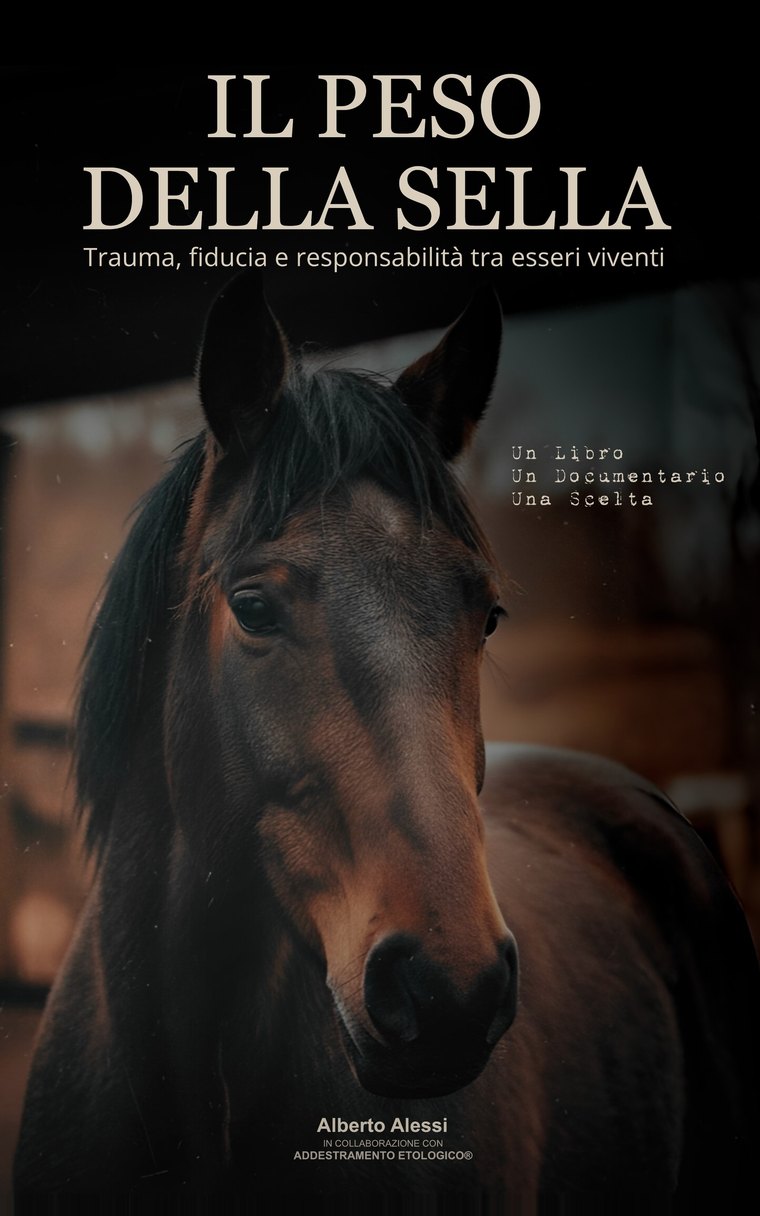
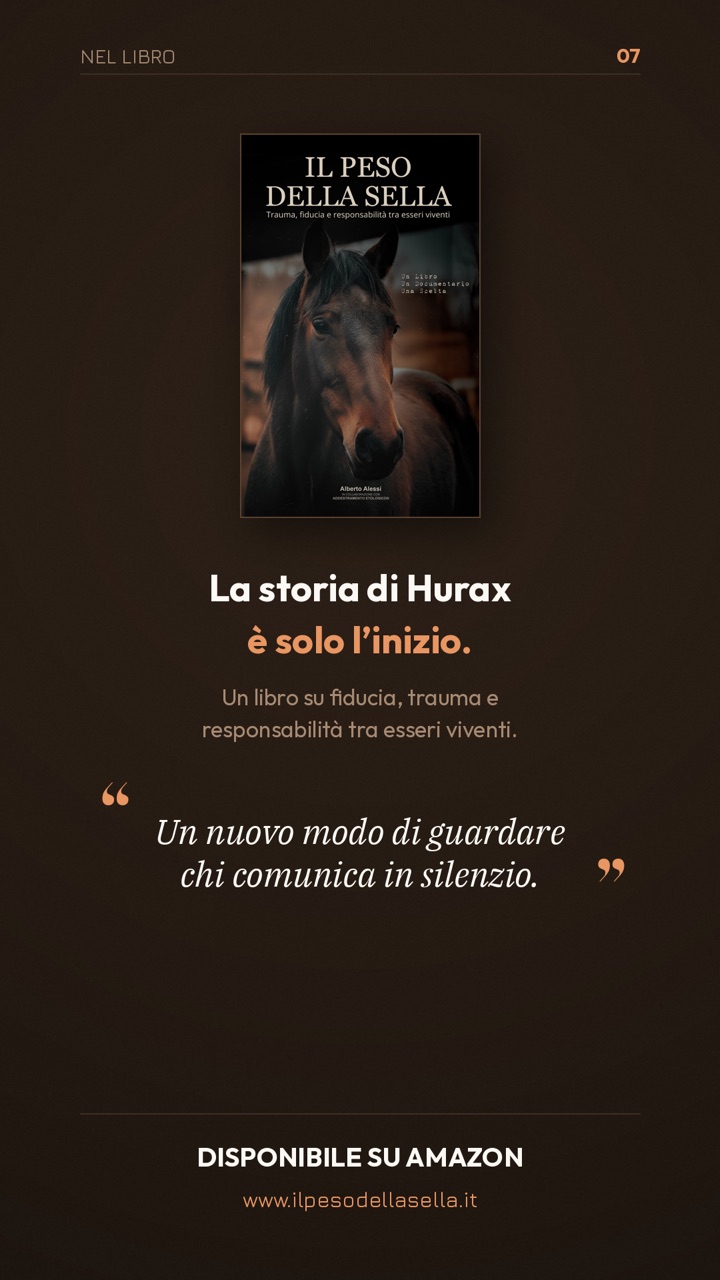
The Weight
of the Saddle

Trauma, trust and responsibility between living beings.

«Some wounds can't be seen. But they change everything.»

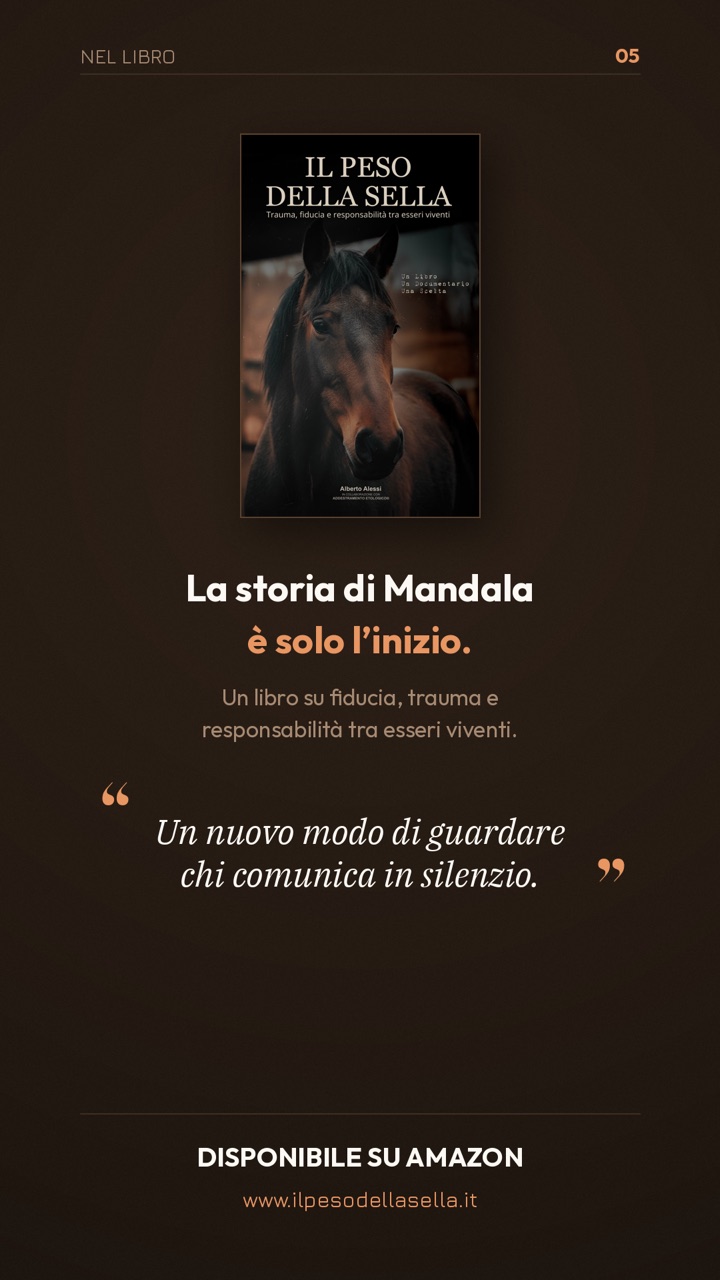
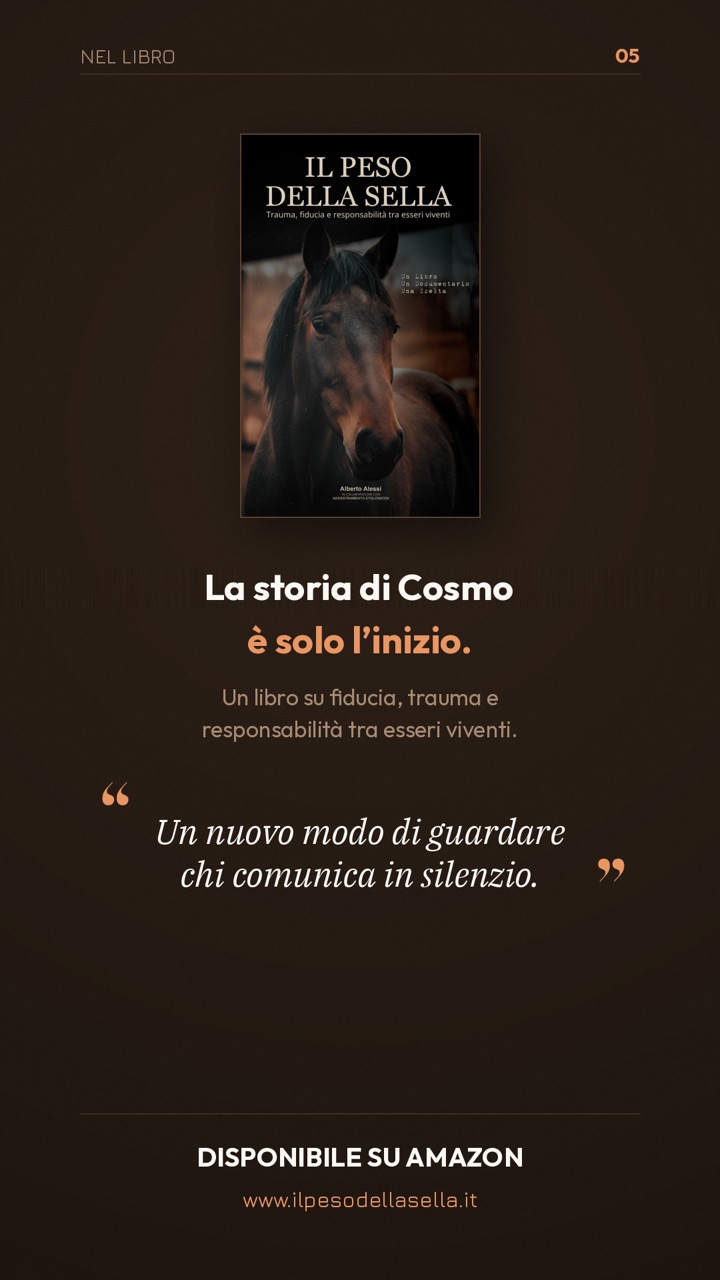
Cover of The Weight of the Saddle
The idea

«Every horse has a story. Every mistake, a weight.» Yet all it takes is to stop, to truly look, and everything that was invisible reveals itself.

The launch reel

The project in thirty seconds.

The origins of the project

Born as a documentary. First, it became a book.

The Weight of the Saddle was born along a path made of mistakes, encounters and postponed choices: from watching horses that carry in their minds the mark of human decisions never questioned. A project that tries to look trauma in the eye and to give responsibility back to those who choose.

«At a certain point it became clear that, before being a documentary, this project had to become a book.»

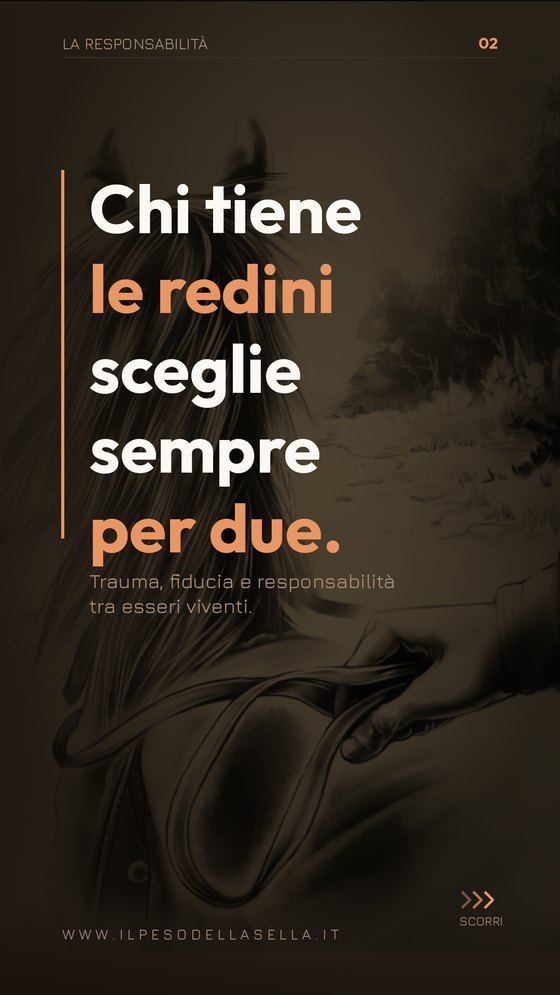
Whoever holds the reins always chooses for two
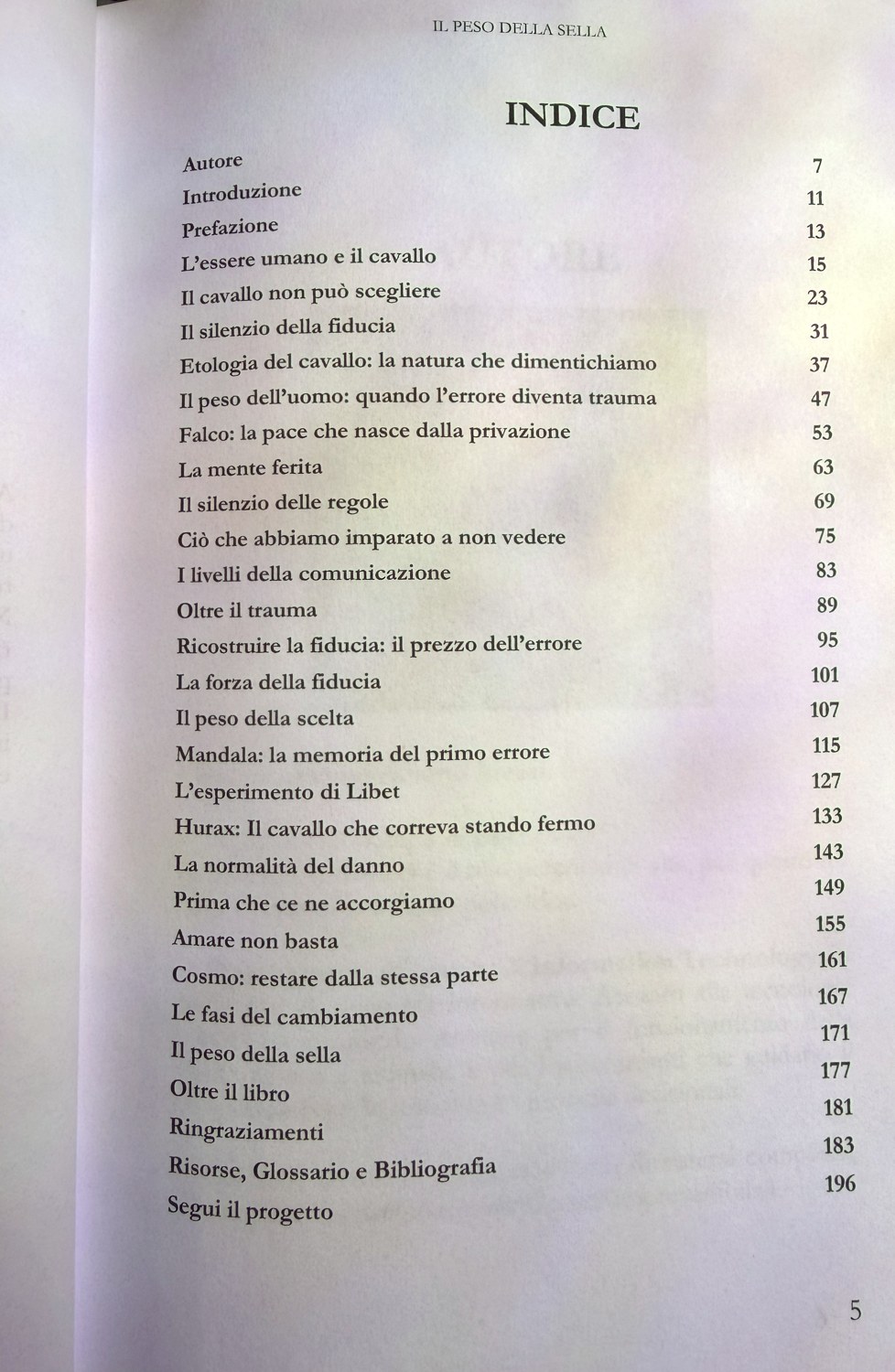
What The Weight of the Saddle is
The book

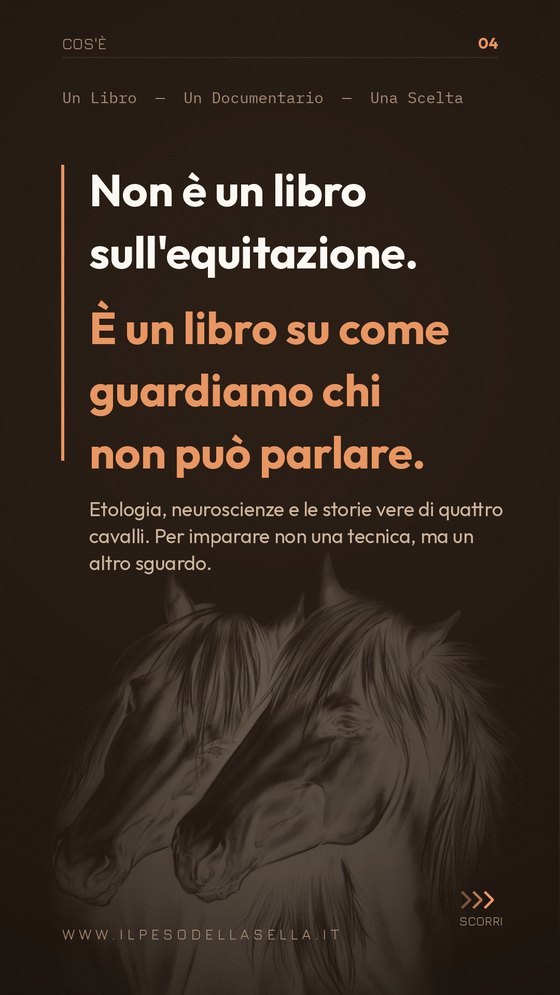
It's not a book about horsemanship. It's a book about how we look at those who cannot speak.

A journey through science, ethology and real stories that questions a deep-rooted belief: that obedience is collaboration, and that silence is consent.

The book's disciplines
01

Ethology

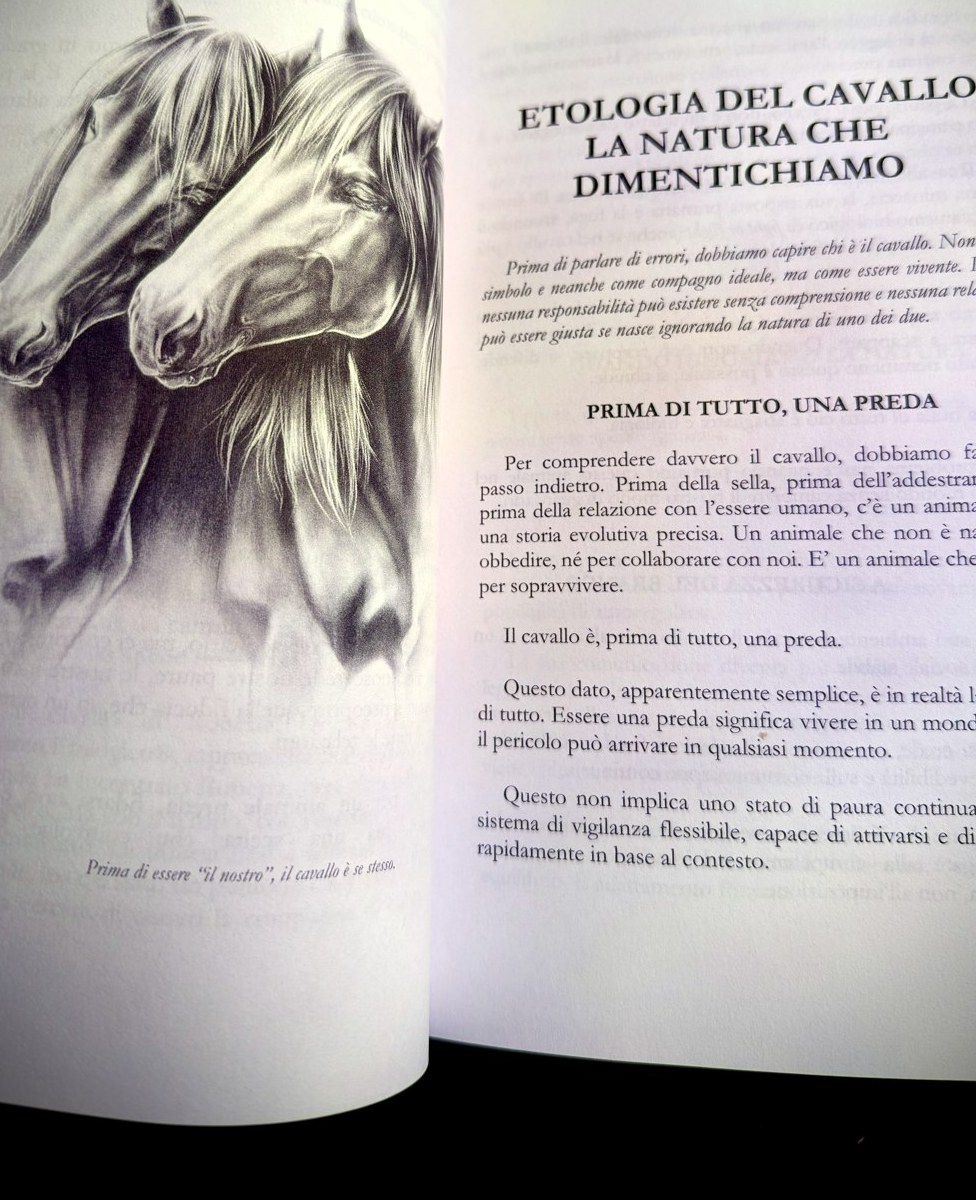
The nature we forget. Reading the horse for what it is: a prey animal, not an opponent to be broken.

02

Neuroscience

How fear is born. The body remembers what the mind can no longer explain.

03

Psychology

The wounded mind: how trauma is built when we impose, and the phases through which it heals.

04

Philosophy

Freedom and responsibility. From Libet's experiment to a being that cannot choose.

05

Communication

The levels of silent dialogue. Listening to what is not said in words.

06

Responsibility

Loving isn't enough. When love takes the place of listening, every gesture carries a weight.

The stories

Four horses. Four true stories.

Swipe through each story's slides, or tap them to view full screen.

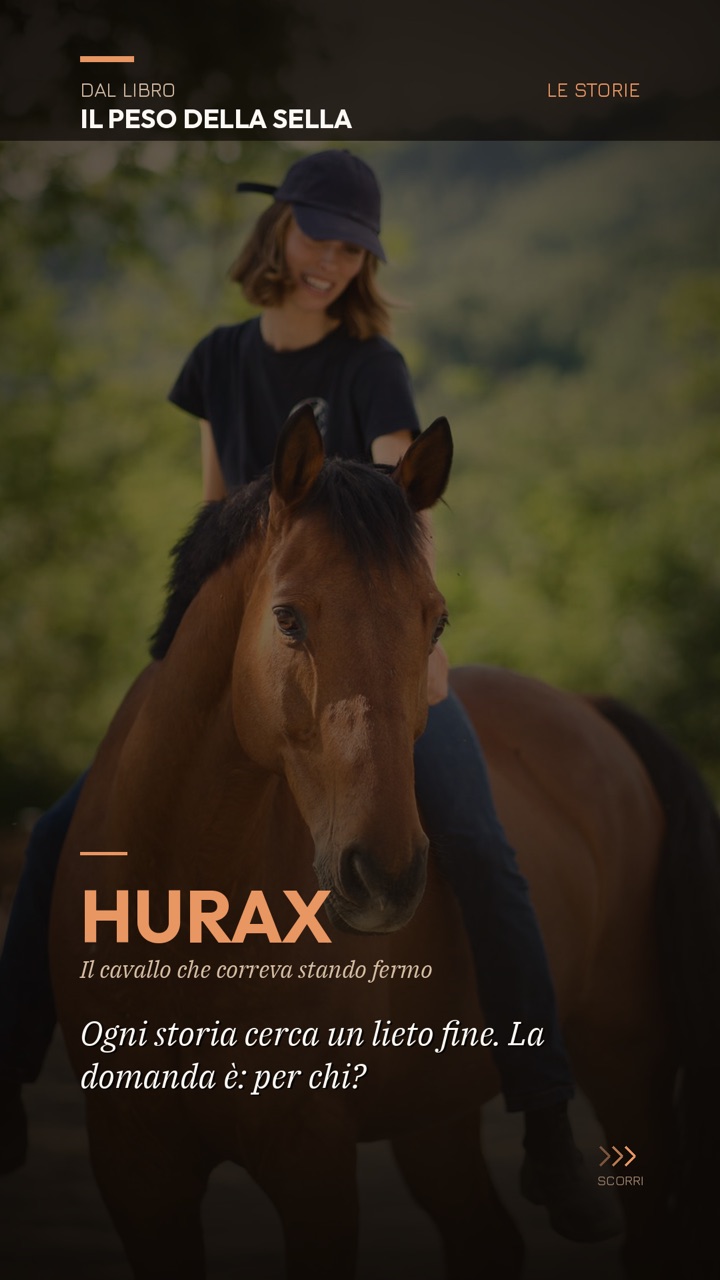
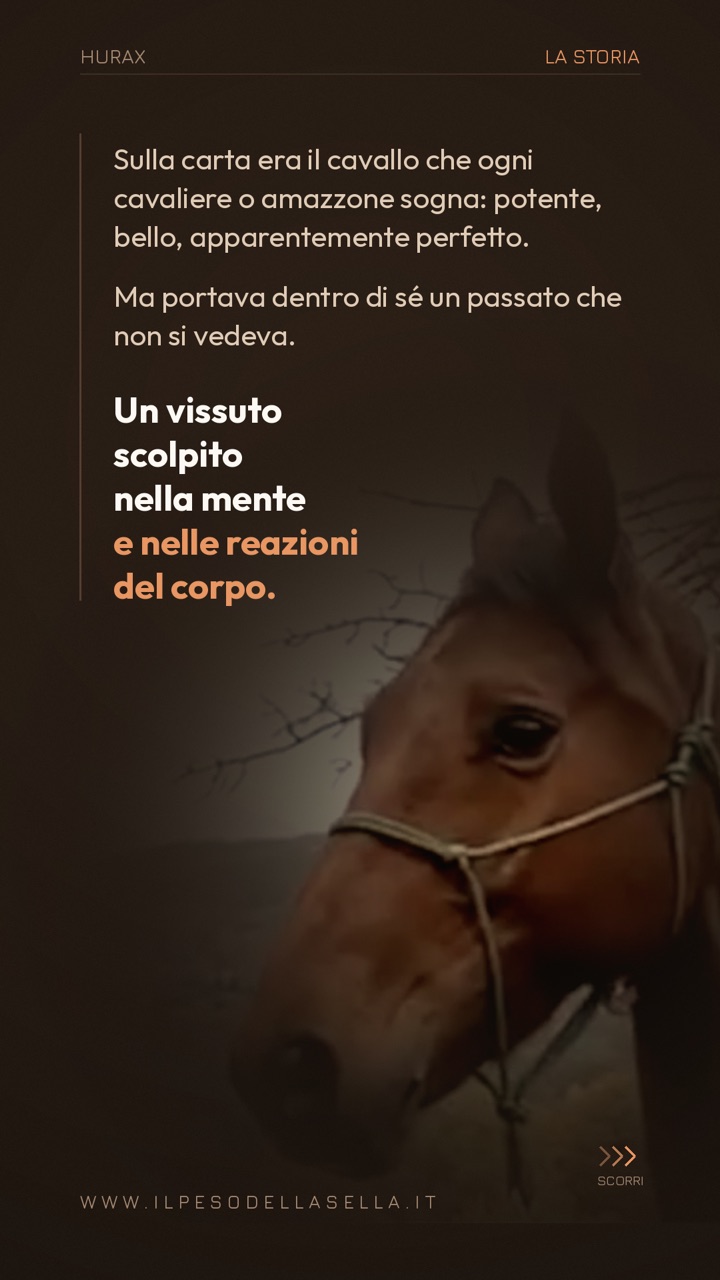
Hurax
The horse that ran while standing still

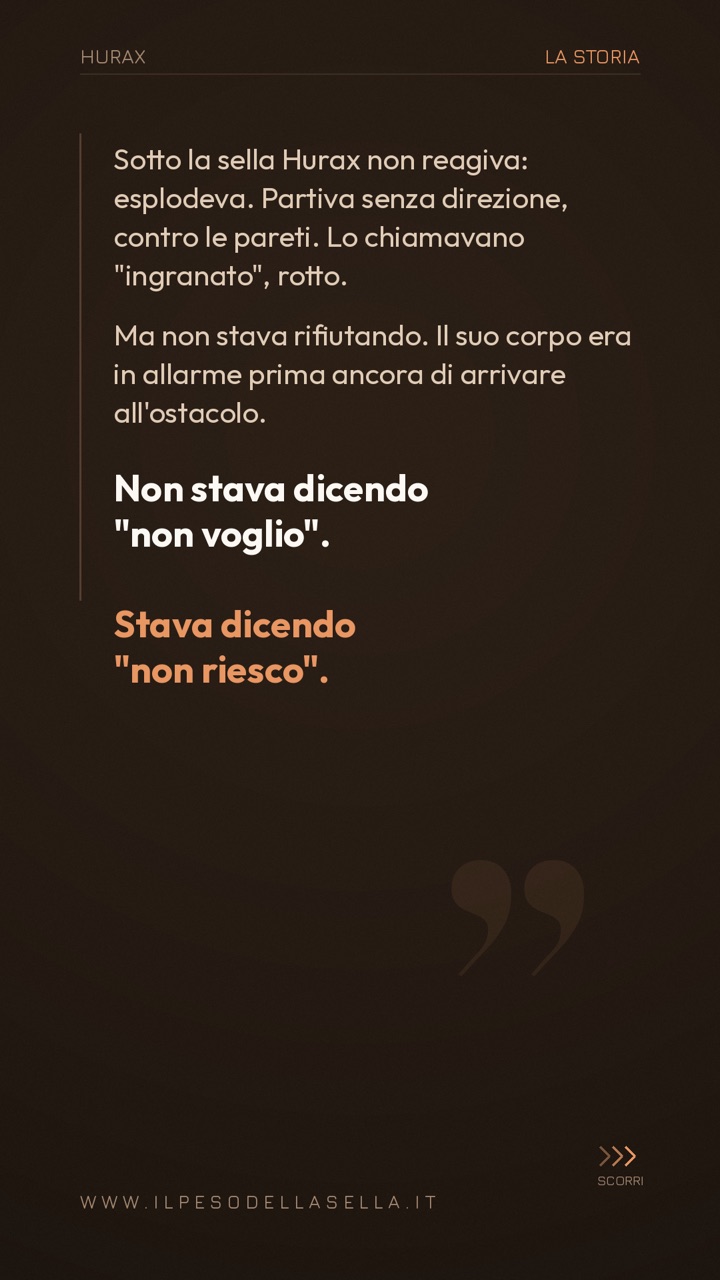
«He wasn't saying "I don't want to". He was saying "I can't".»

Hurax: the line from the book
Hurax: the invisible past
Hurax: I don't want to, I can't
Hurax: the book
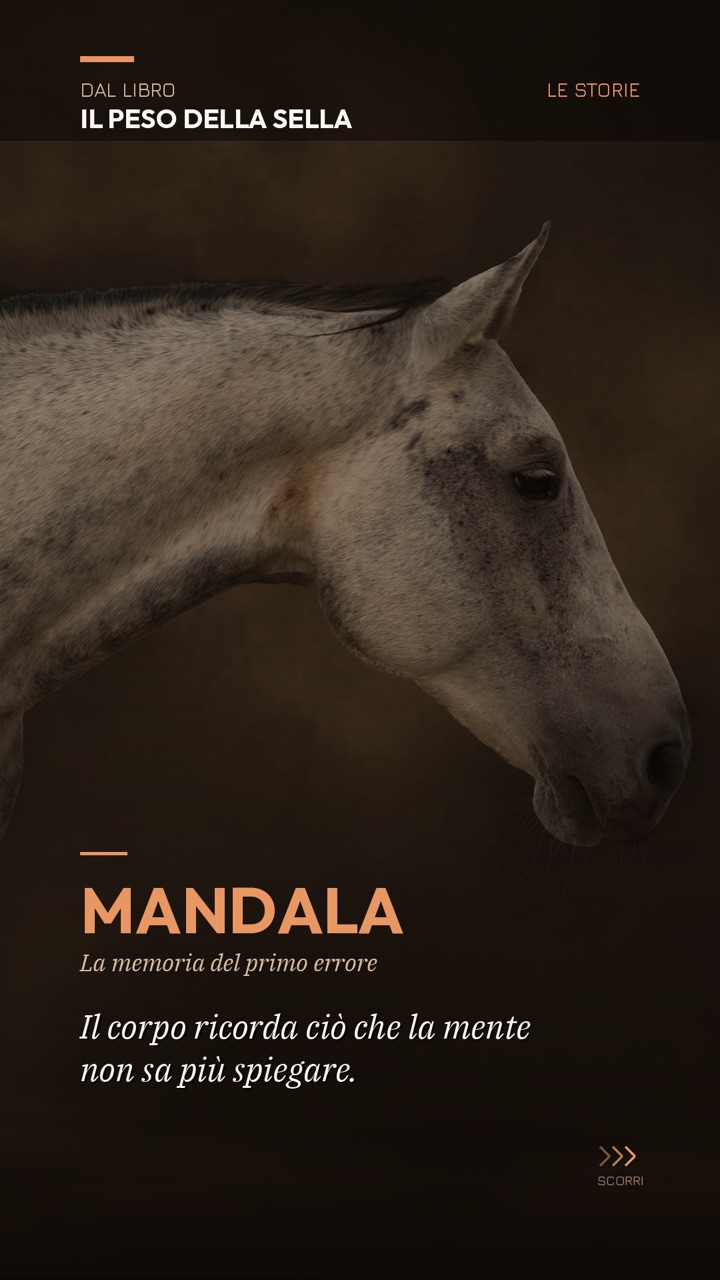
Mandala
The memory of the first mistake

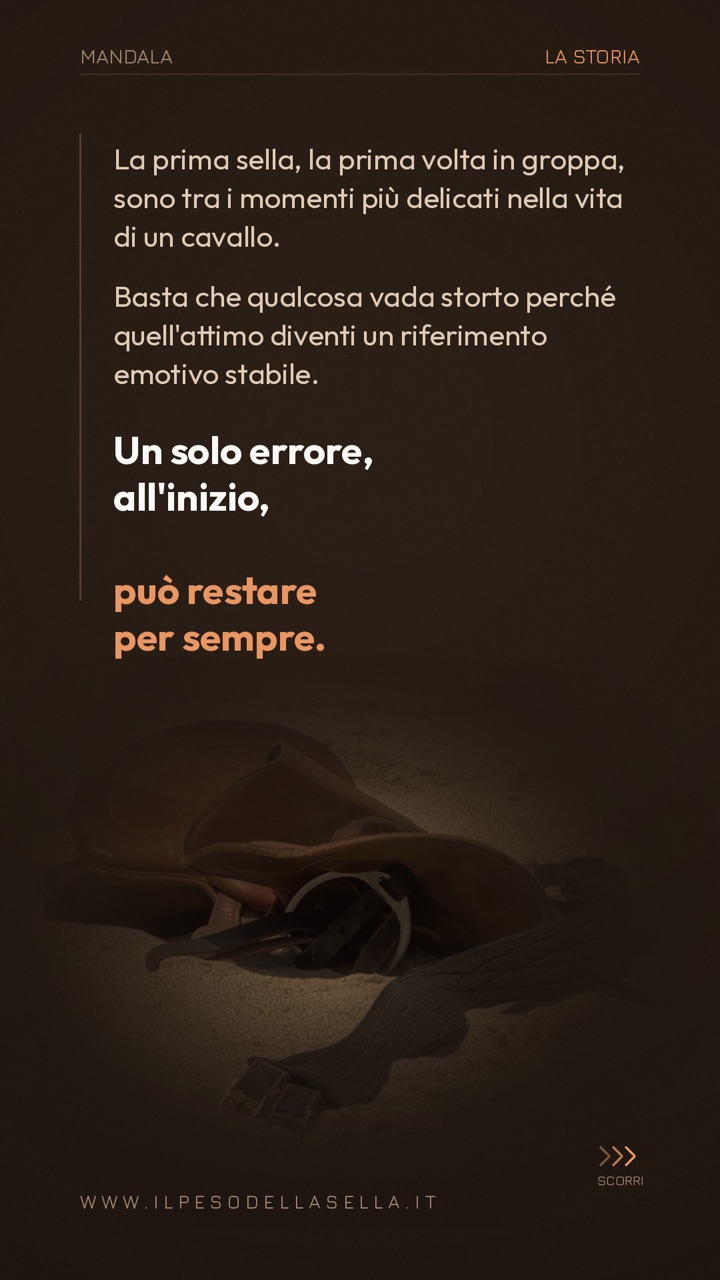
«A single mistake, at the start, can last forever.»

Mandala: the line from the book
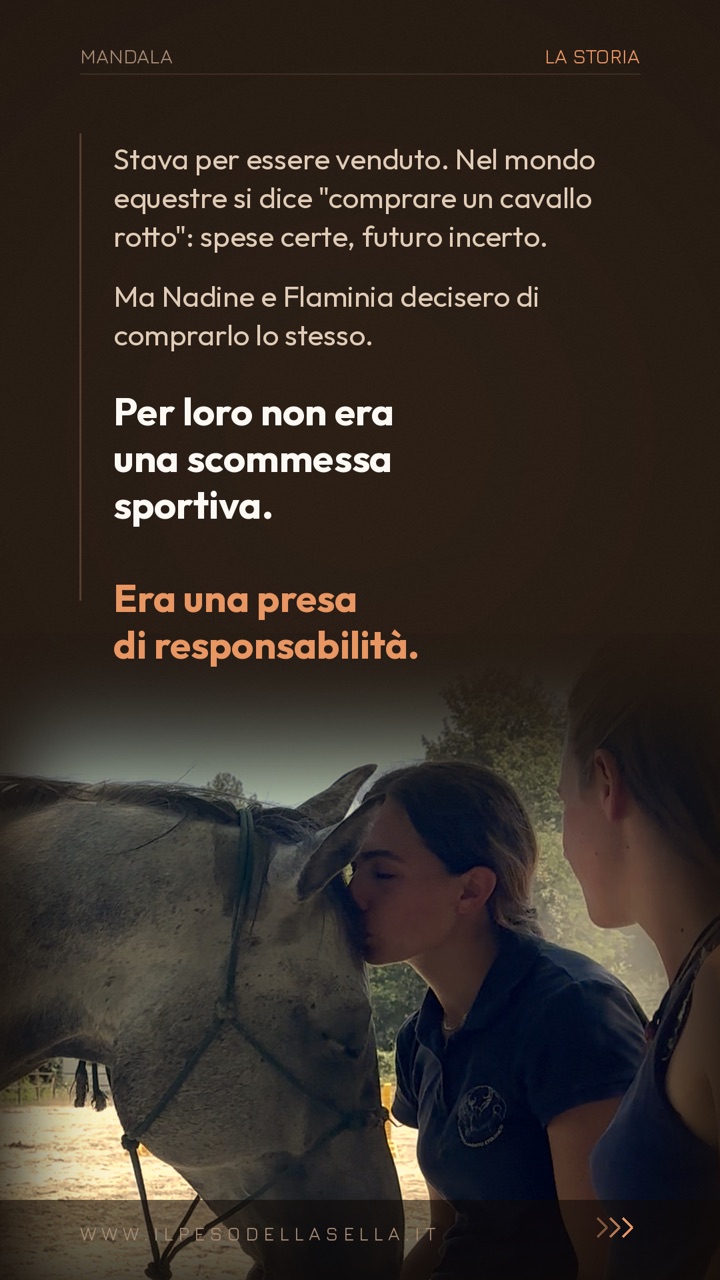
Mandala: the first mistake
Mandala: responsibility
Mandala: the book
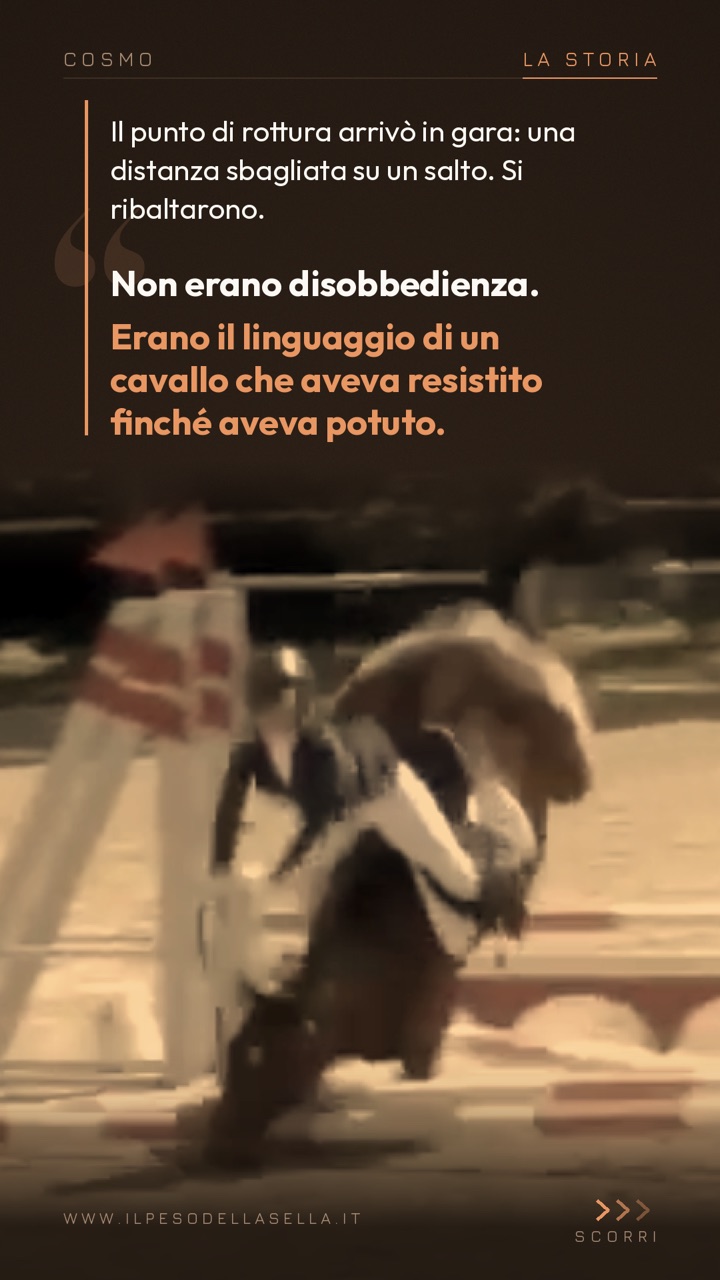
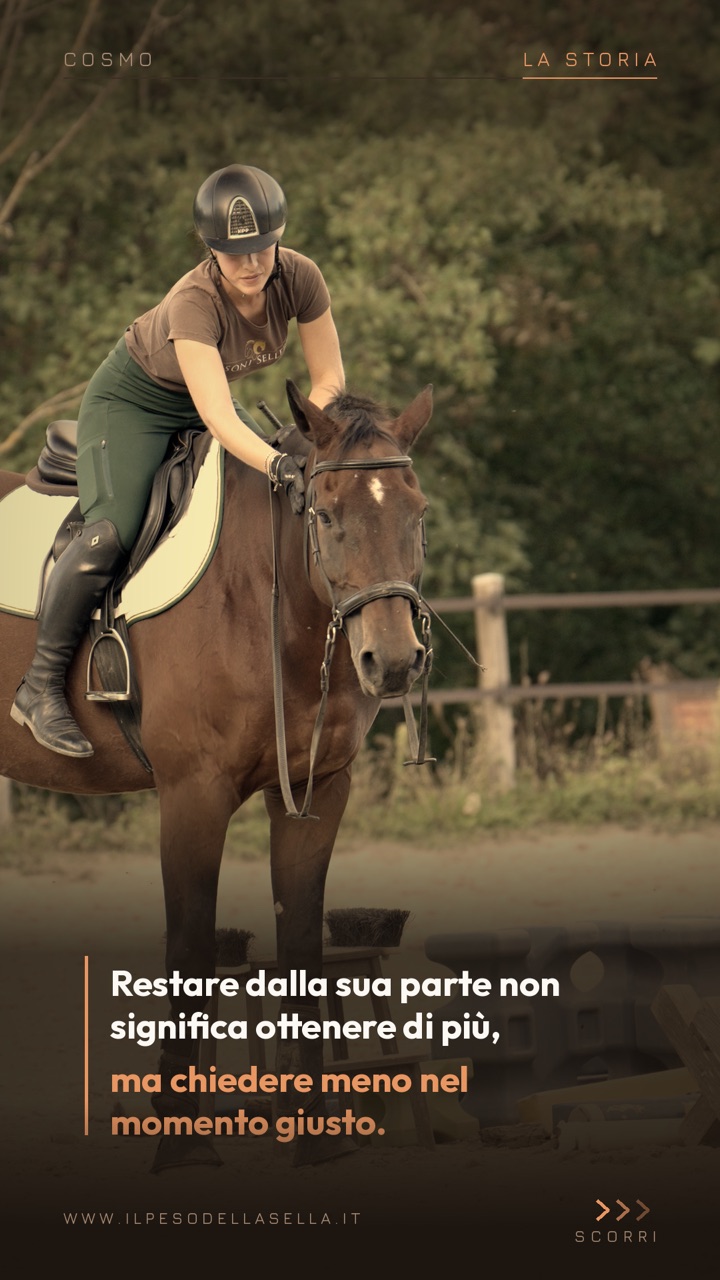
Cosmo
Staying on the same side

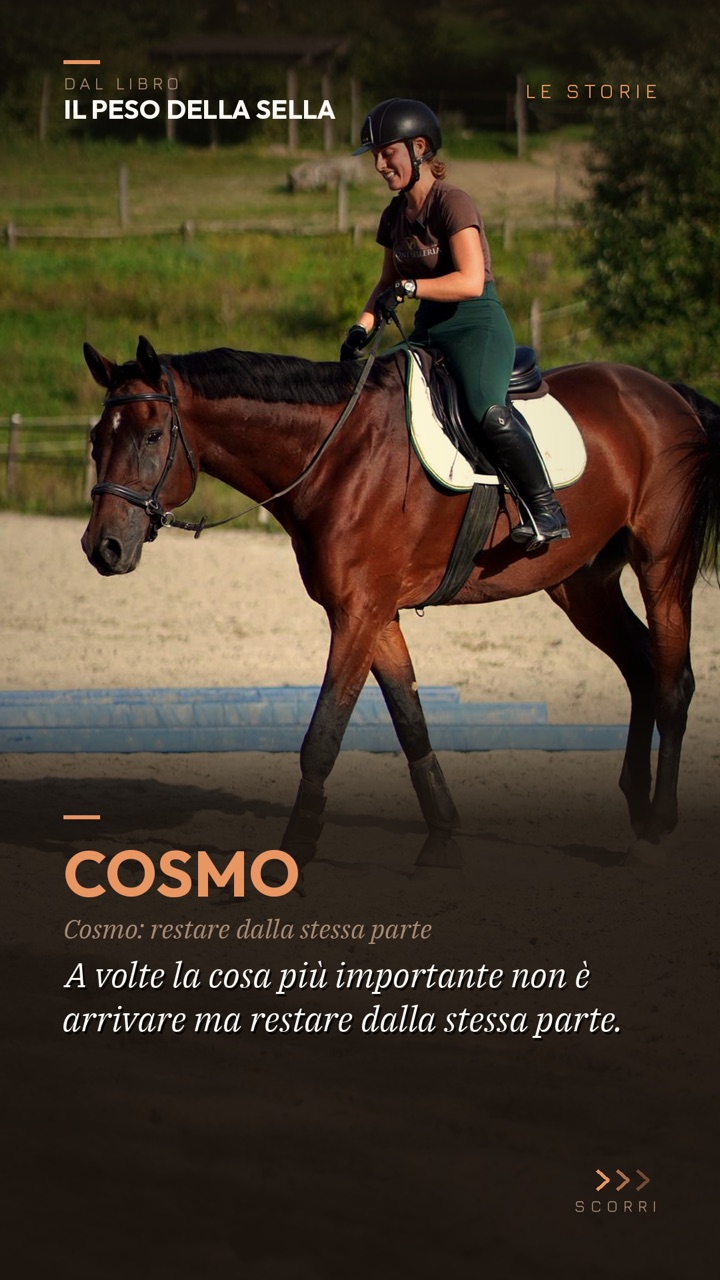
«Loving isn't enough: you have to stay on his side, always.»

Cosmo: the line from the book
Cosmo: the fall
Cosmo: on the same side
Cosmo: the book
Falco
The peace born of deprivation

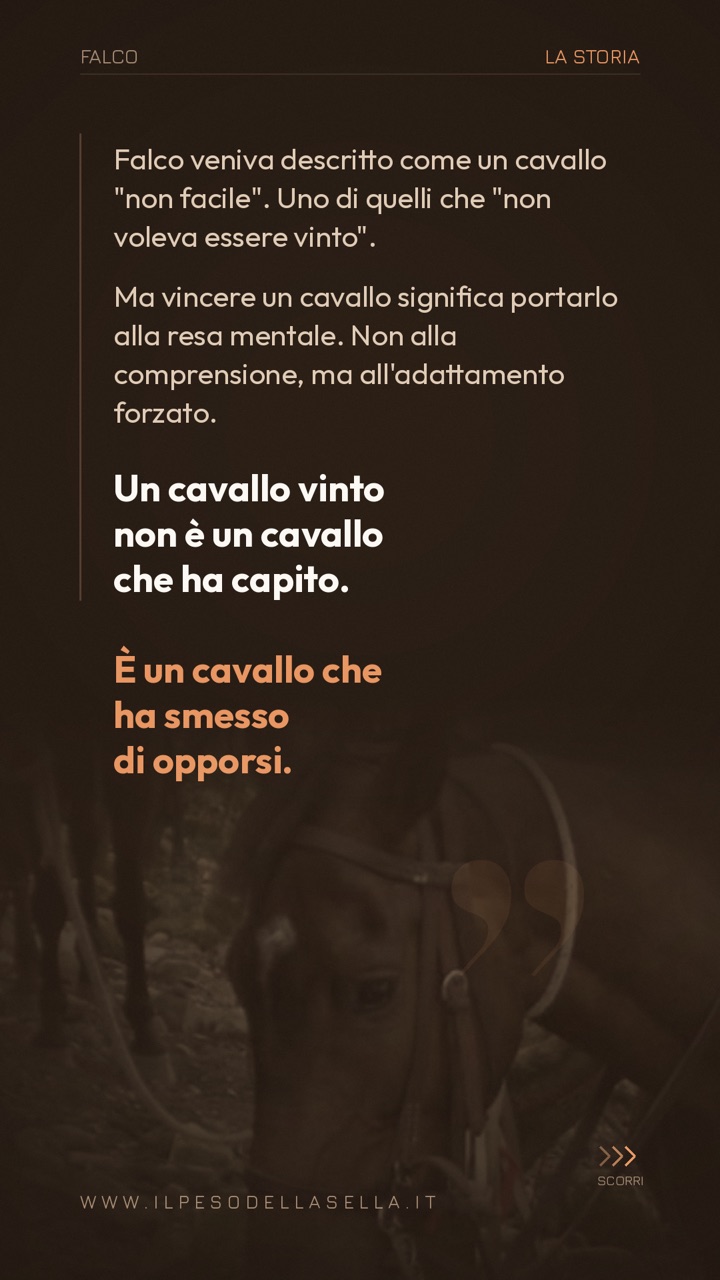
«A horse that has been broken is not a horse that has understood. It's a horse that has stopped resisting.»

Falco: the line from the book
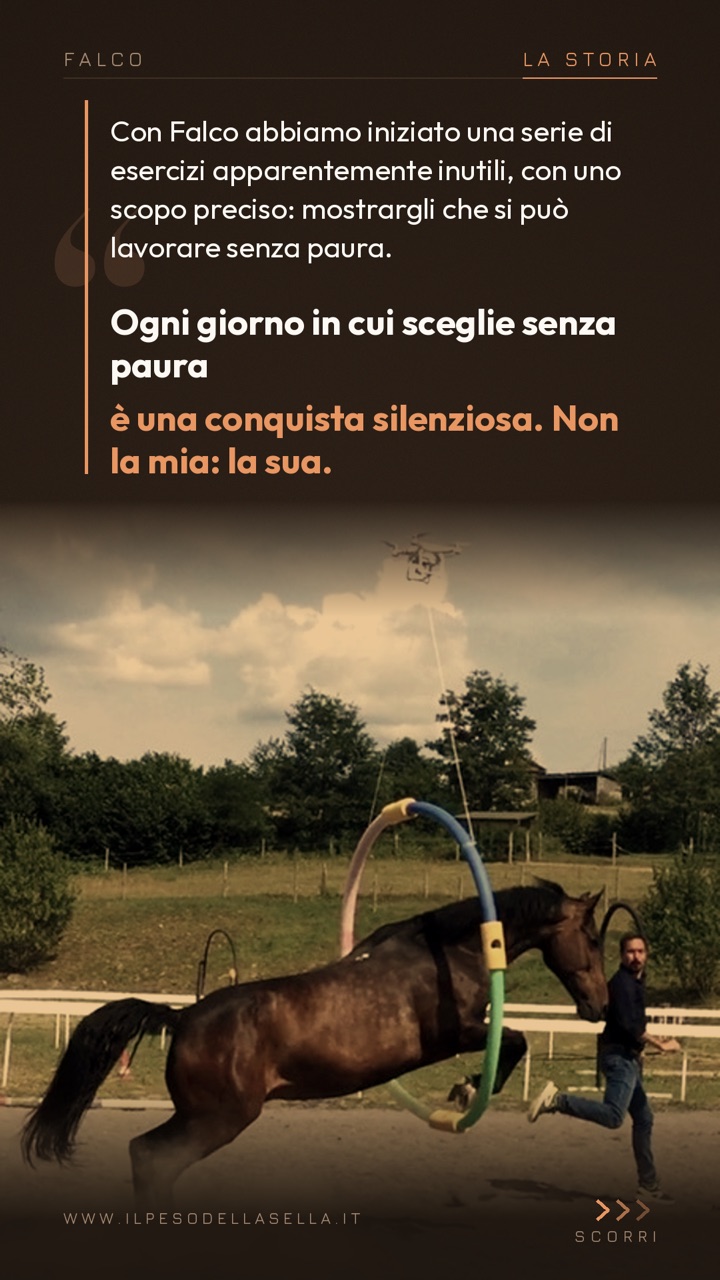
Falco: the story
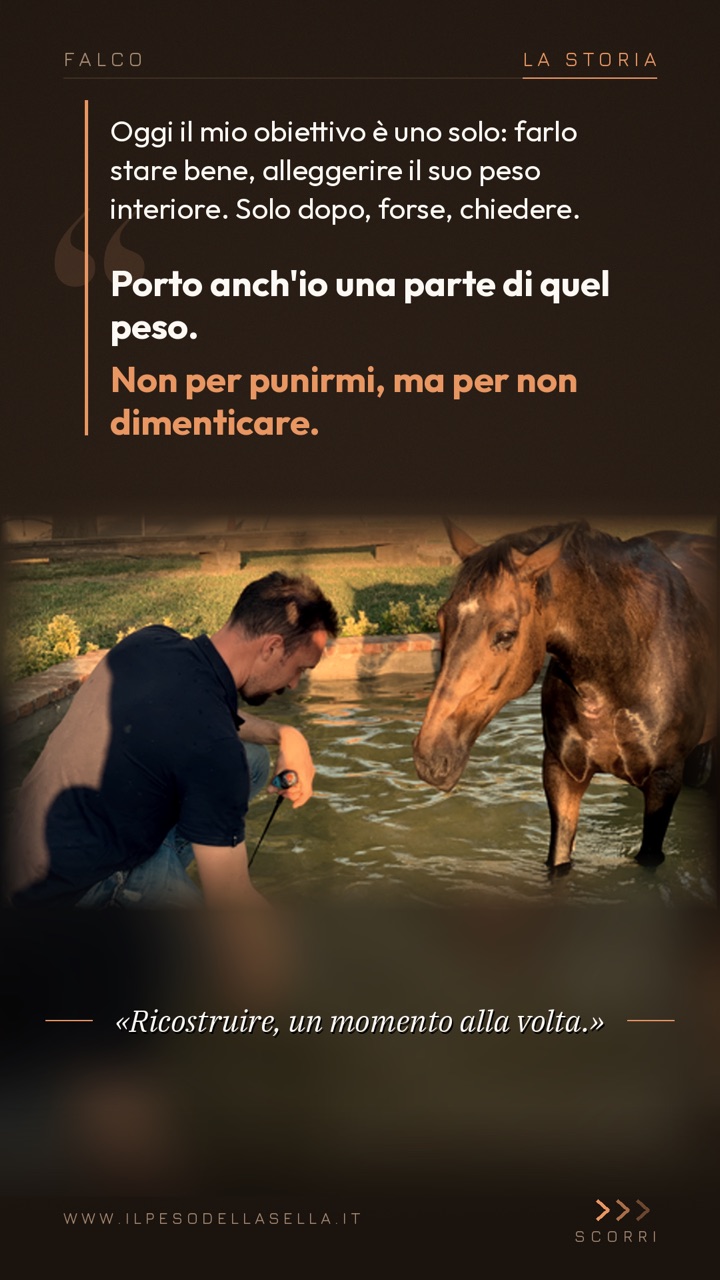
Falco: the rebirth
Falco: the bond
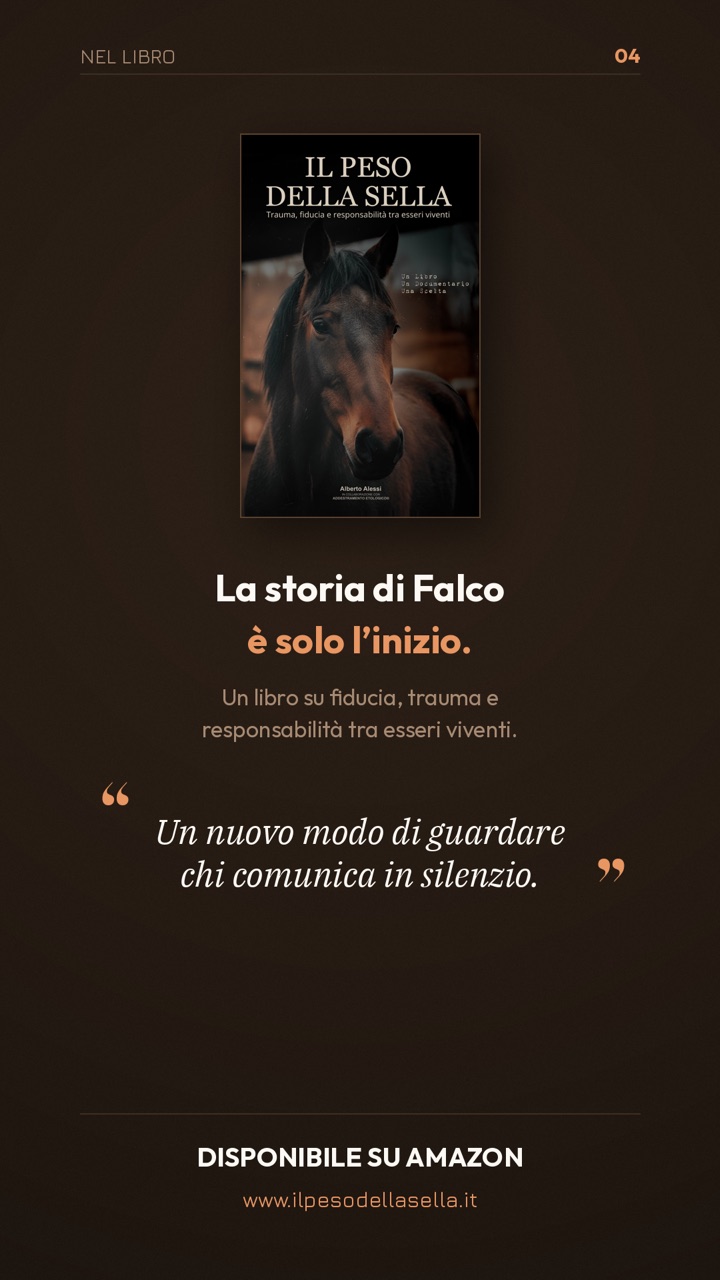
Falco: the book
The thread that connects the stories

Change, too, has its phases.

Beyond the stories and the science, the book offers a model of the phases of change, inspired by the work of Elisabeth Kübler-Ross: a map of what happens, inside us, when a great change comes.

IDenial
IIAnger
IIIBargaining
IVDiscouragement
VAcceptance
Not only horses: the human mind

The most uncomfortable part of the book is about us.

The Weight of the Saddle goes where few look: into the way the human mind decides. Neuroscience, psychology and the philosophy of choice, from Libet's experiment onward, reveal an uncomfortable truth: many of our actions arise before thought, and consciousness comes afterward, looking for an explanation.

We believe we are deciding. Often we are justifying what we have already done.

Freedom is not so much acting as the ability to stop in time.

Choosing for those who cannot choose demands the courage to doubt oneself.

«We think we choose, but the body has already decided. The mind arrives afterward, looking for an explanation.»

The questions behind the book

The question is not «how». It's «why».

Why does he sometimes seem «good», yet inside he is switched off?

Why does a horse stop reacting?

What are we really asking of a horse?

«A horse responds to what we are, not to what we say we are.»

The illustrations

Giving shape to what cannot be seen.

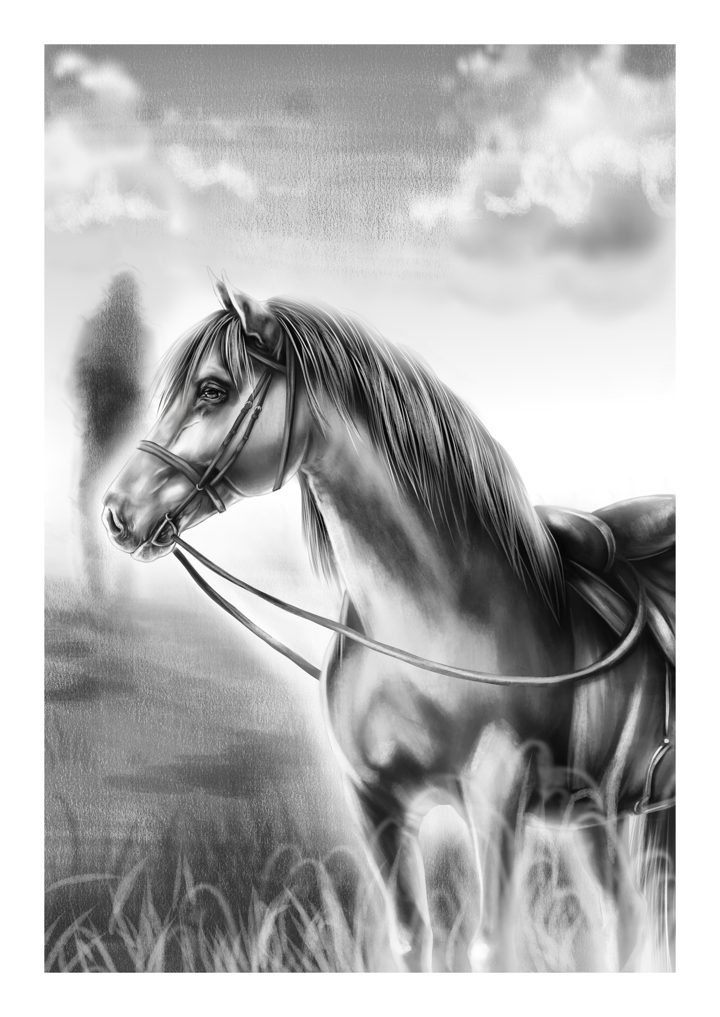
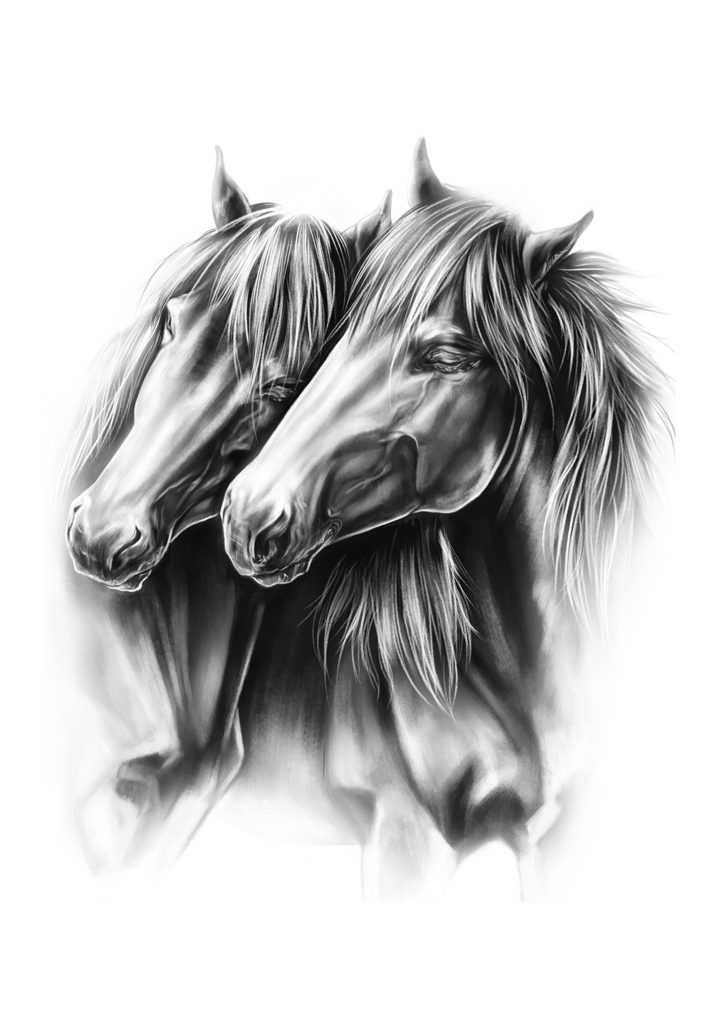
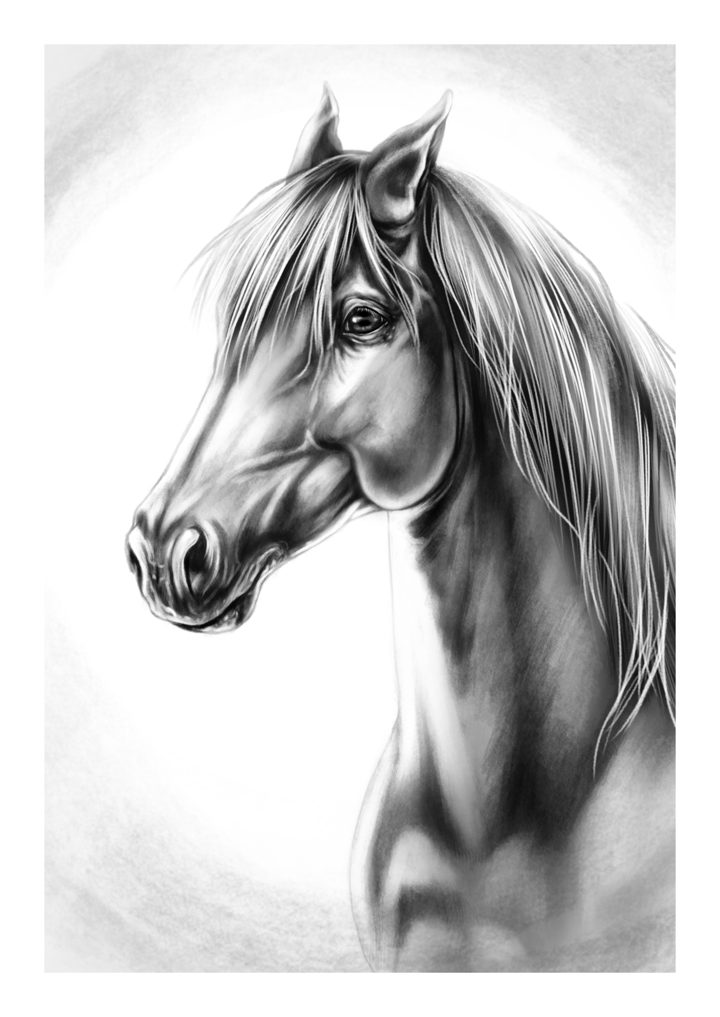
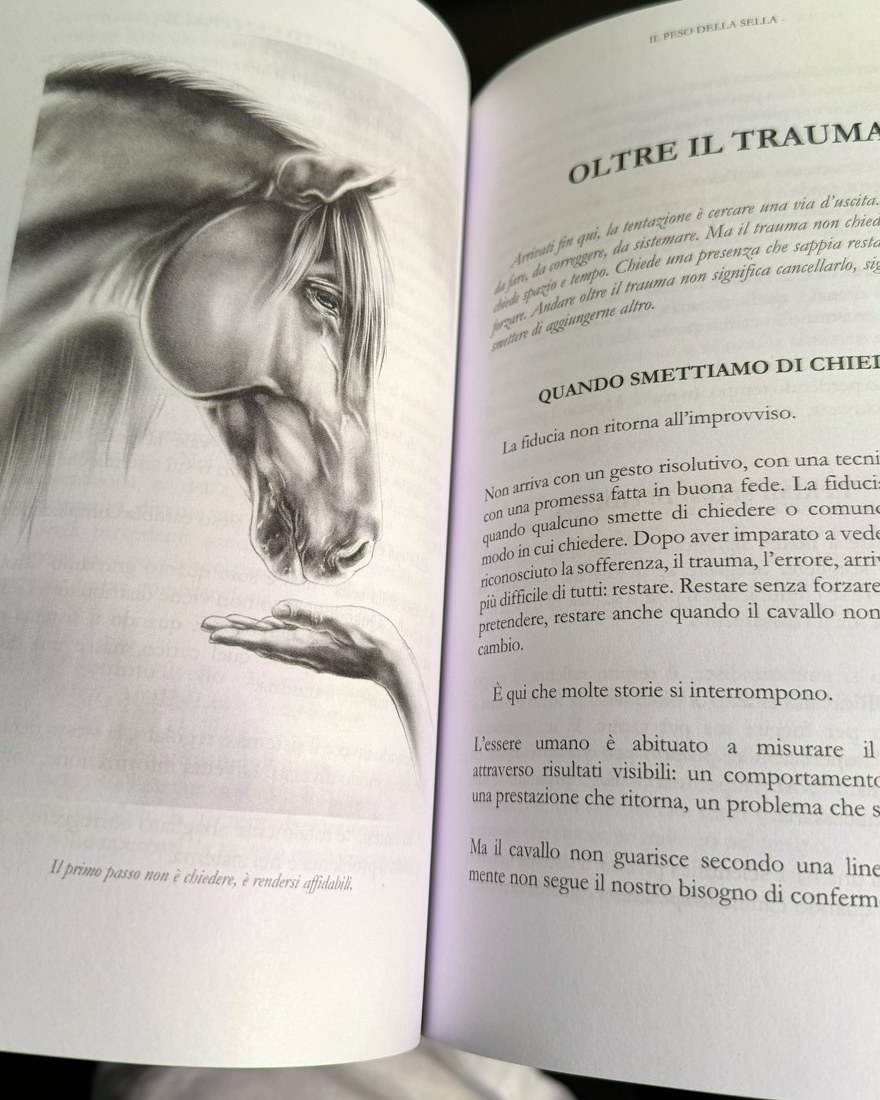
The illustrations of The Weight of the Saddle bear the signature of Fosca Mastrandrea, a naturalistic illustrator. With her line she has portrayed the key moments of the story: the glances, the gestures, the silences that words can only suggest. A special thanks to her: her images don't decorate the book, they run through it.

Illustrations © Fosca Mastrandrea

FM

Fosca Mastrandrea

Naturalistic illustrator
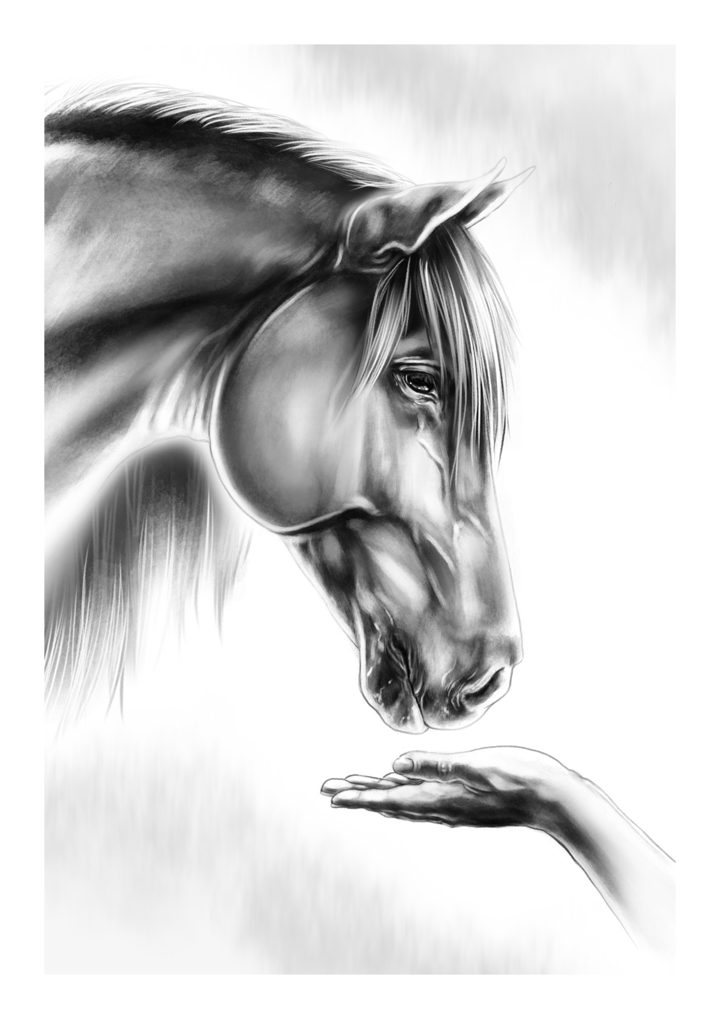
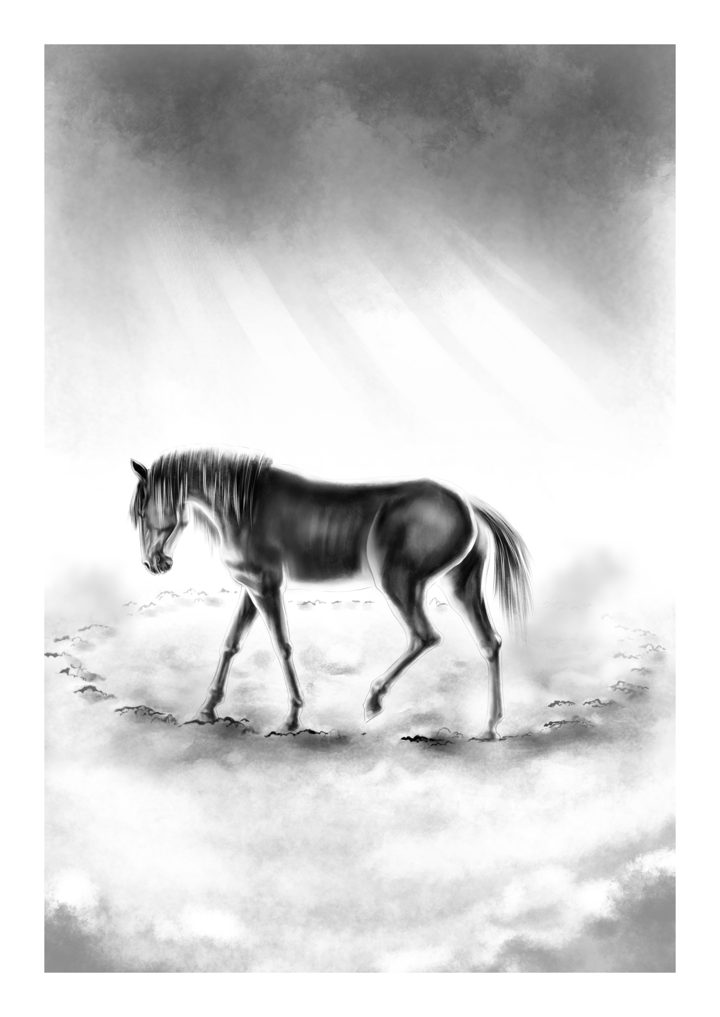
A glimpse of some of the plates in the book.
Illustration by Fosca Mastrandrea
Preview
Illustration by Fosca Mastrandrea
Preview
Illustration by Fosca Mastrandrea
Preview
Illustration by Fosca Mastrandrea
Preview
Illustration by Fosca Mastrandrea
Preview
The path

From trauma to trust.

I

The weight of the mistake

When human error becomes the horse's trauma.

II

The wounded mind

What stays invisible: the fear that arises when we don't listen.

III

Rebuilding trust

One moment at a time, at the price of the mistake made.

IV

The weight of the choice

Giving back dignity and a life free of fear.

Loving isn't enough

To truly love means asking yourself, every time: am I acting for his well-being, or for mine?

The documentary

Not a reader. A co-producer.

An independent documentary, created with passion by Alberto Alessi. «Those who cannot choose pay the price of our decisions.»

In production
Not just a purchase

An act of participation.

Buying the book means taking part in a project: every copy contributes directly and concretely to the making of the documentary, protecting its time, its respect and its narrative independence.

01

It funds

It supports the development phases of the documentary, with no sponsors and no narrative compromises.

02

It builds awareness

It gives the reader the tools to truly understand what they will later see.

03

It creates community

People who are not passive spectators, but an active part of the process.

The author

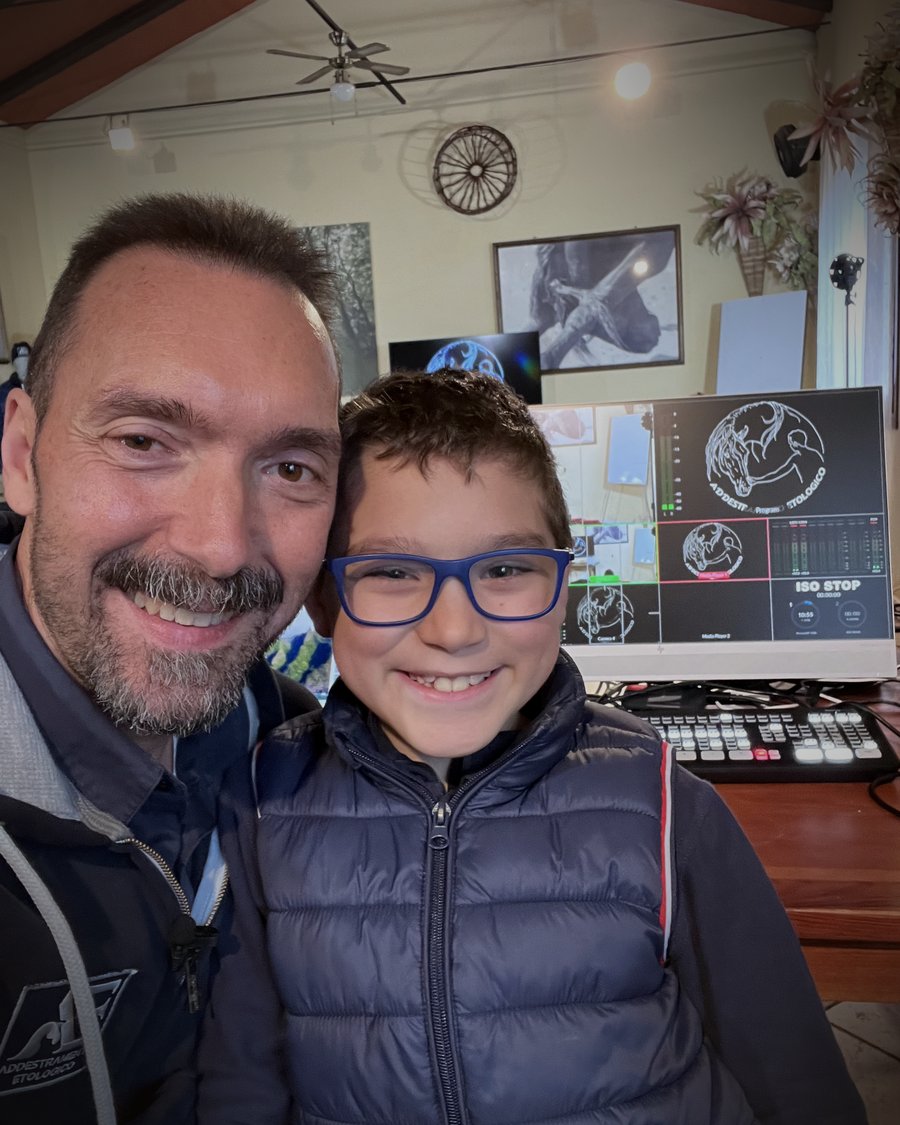
Alberto Alessi

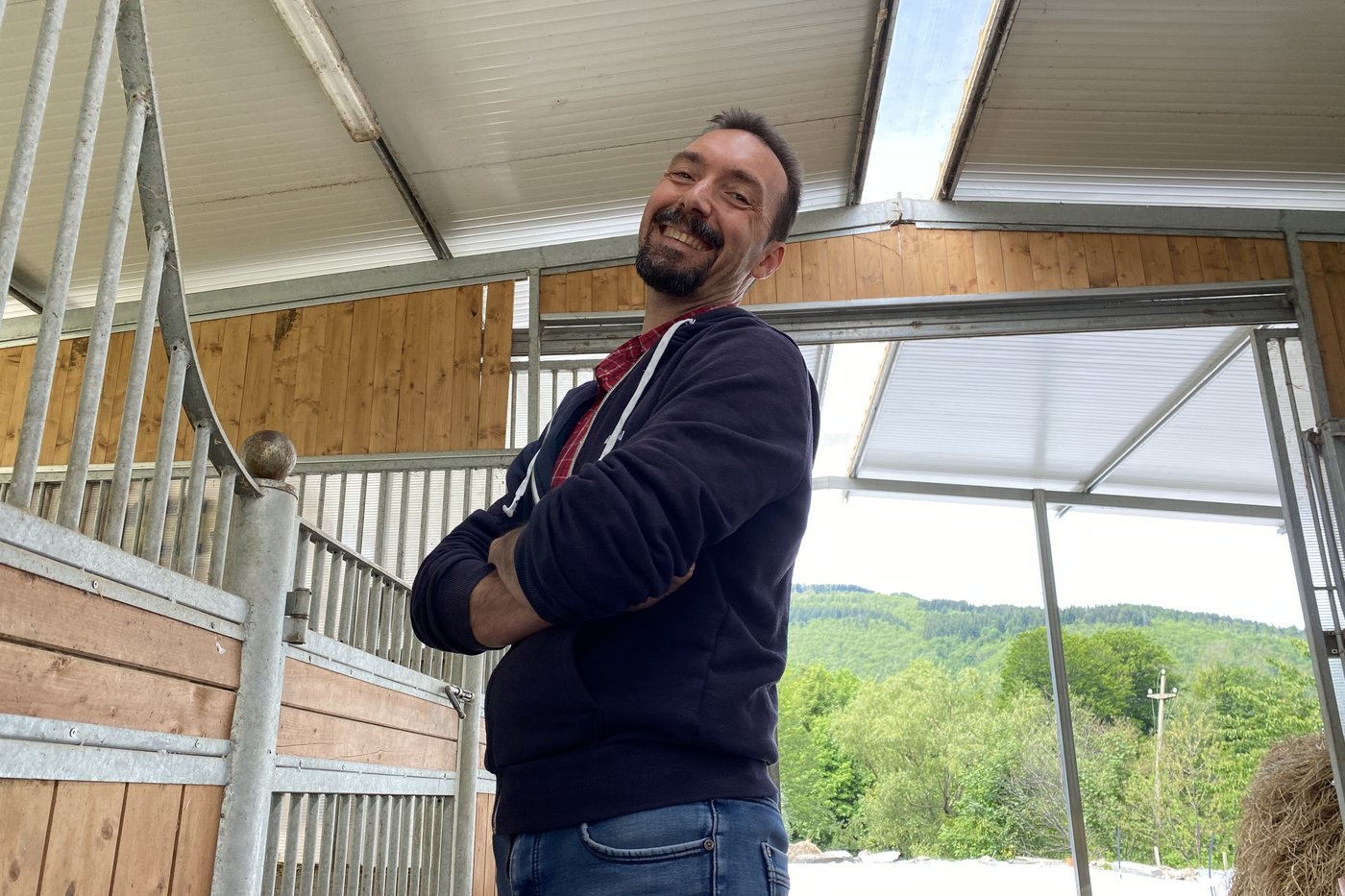
A multifaceted figure: he works in Information Technology and cybersecurity and, alongside technology, cultivates a deep interest in how the human and animal mind works and in the mechanisms that drive behaviour, relationships and decisions. The Weight of the Saddle was born from this meeting of complex systems and empathy.

Contacts
A journey, not a debut

Behind the book, years of work in the field.

Before The Weight of the Saddle, Alberto Alessi built a path made of research, outreach and events. Some milestones:

Addestramento Etologico®

A path shared with Marco Pagliai since 2014 and constantly growing.

Scientific conferences

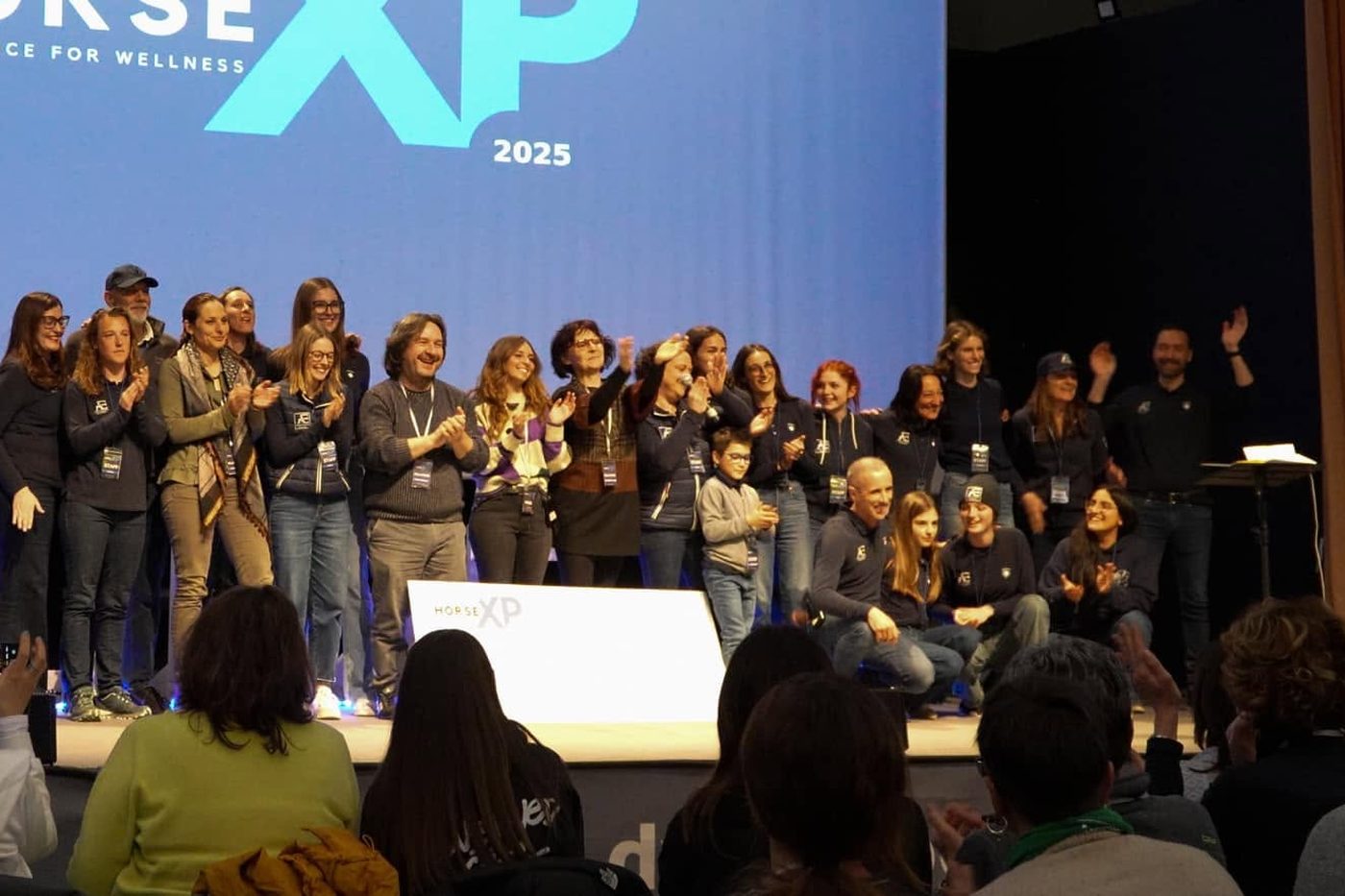
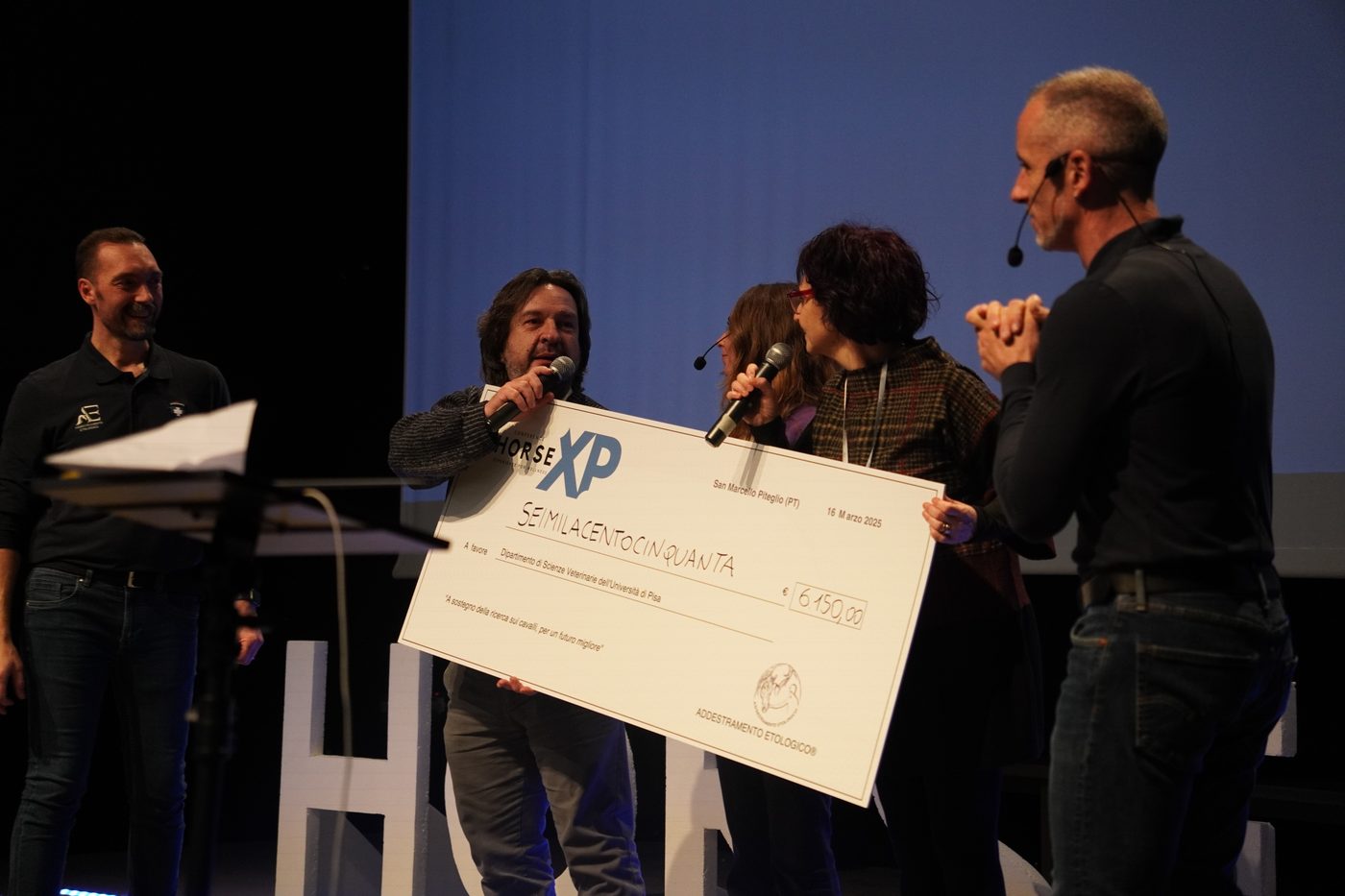
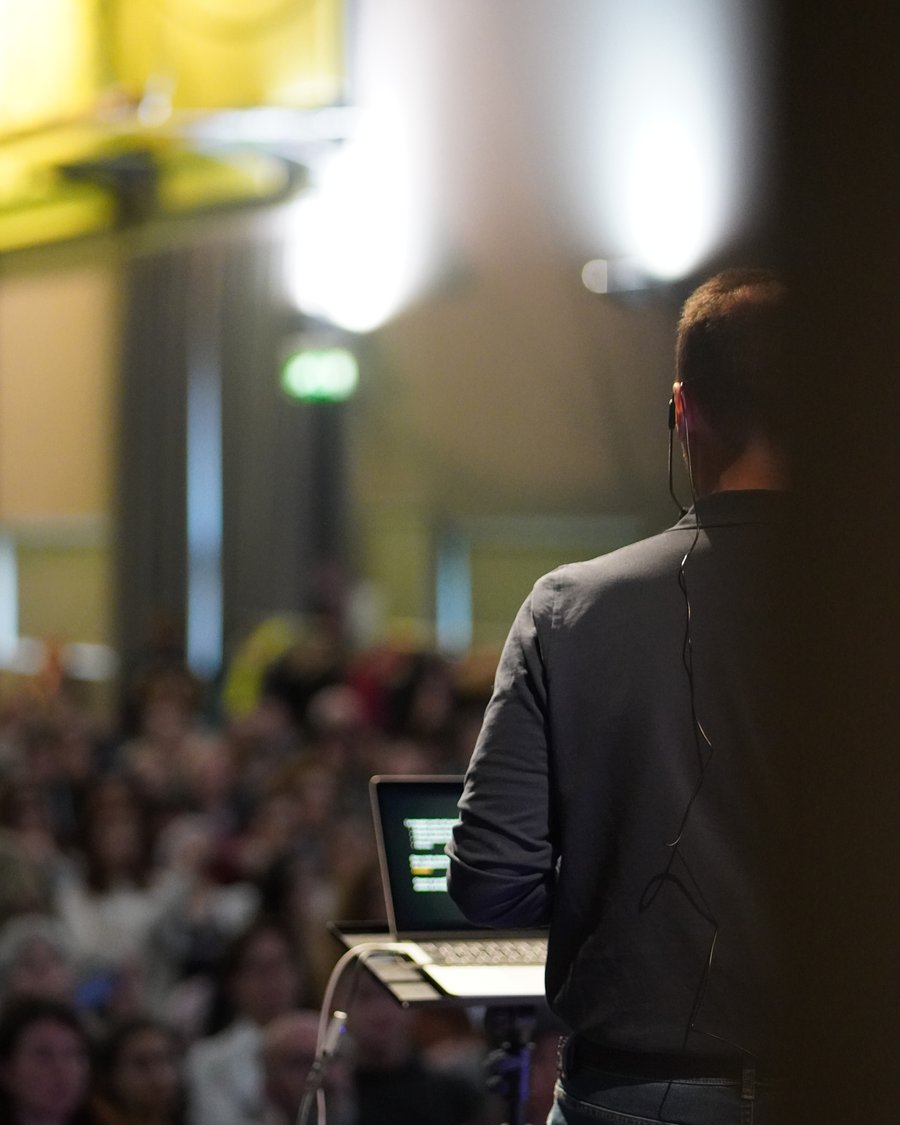
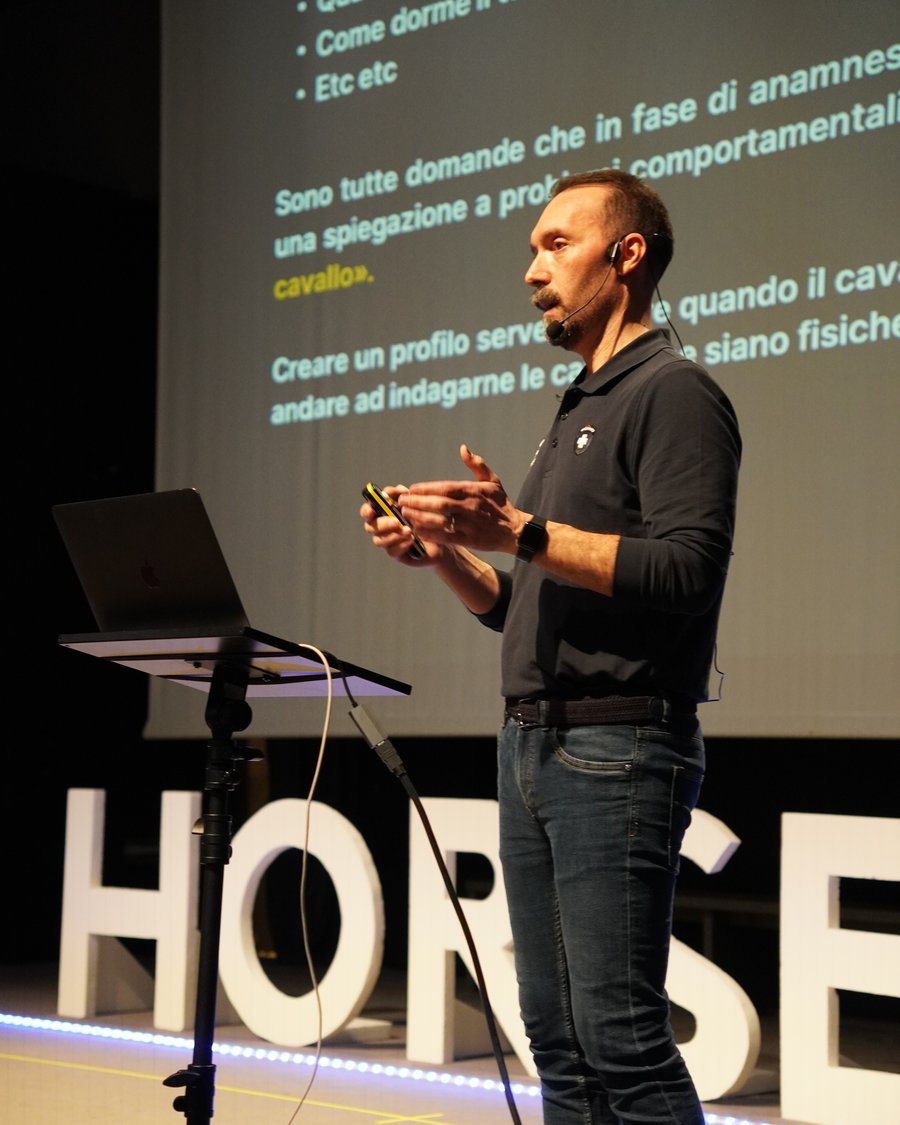
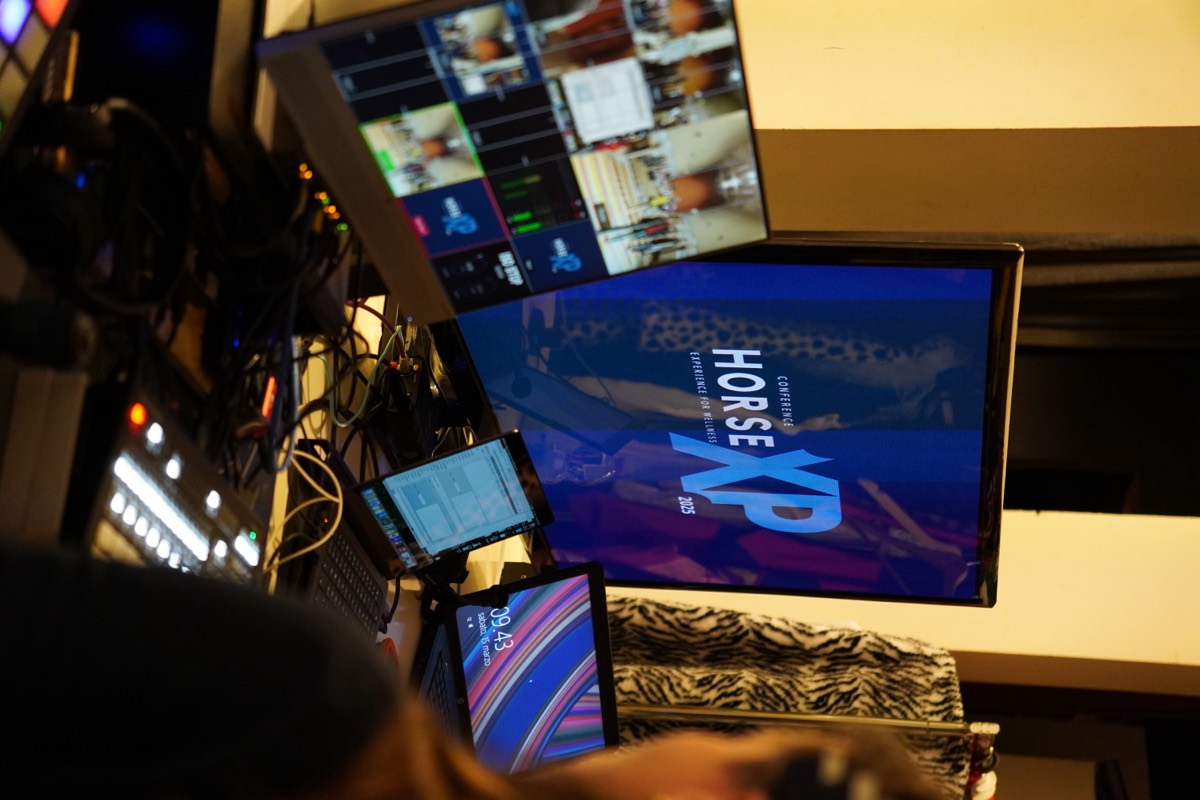
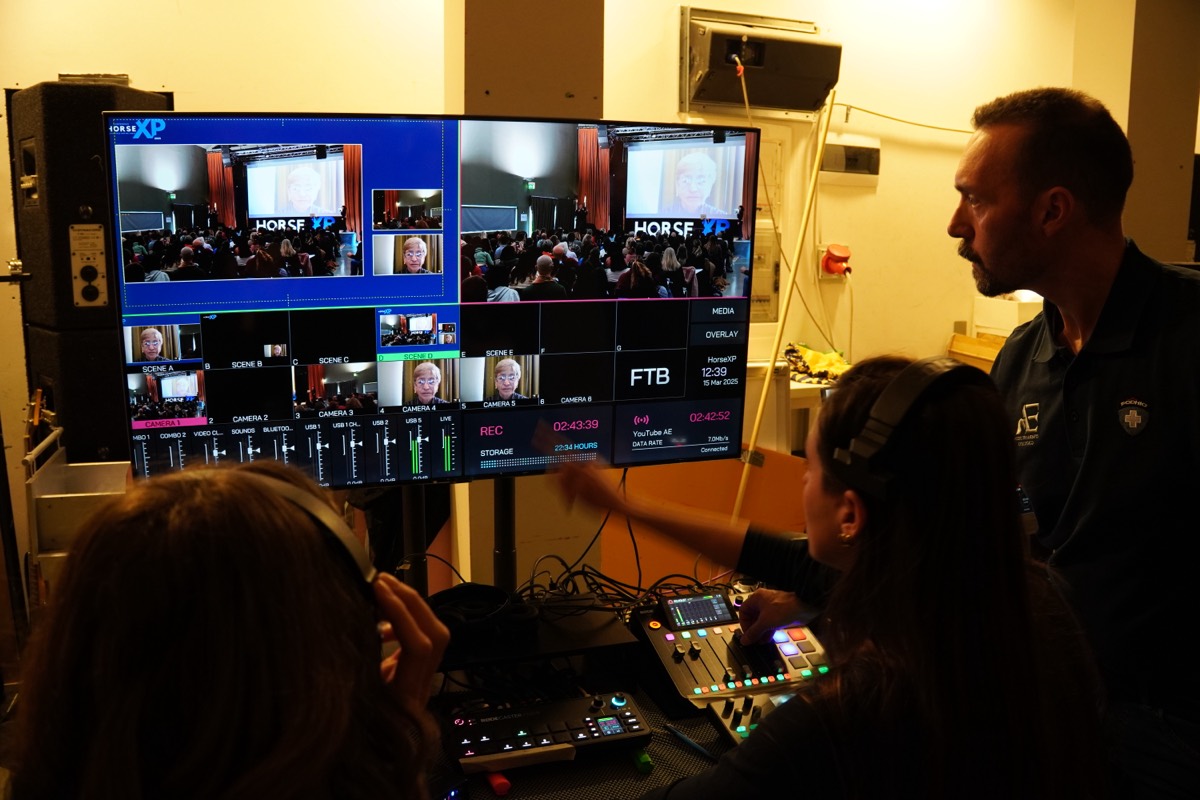
Promoter and among the organisers of Horse WESP (2024) and Horse XP (2025), "Experience for Wellness", a non-profit conference that funds research and outreach.

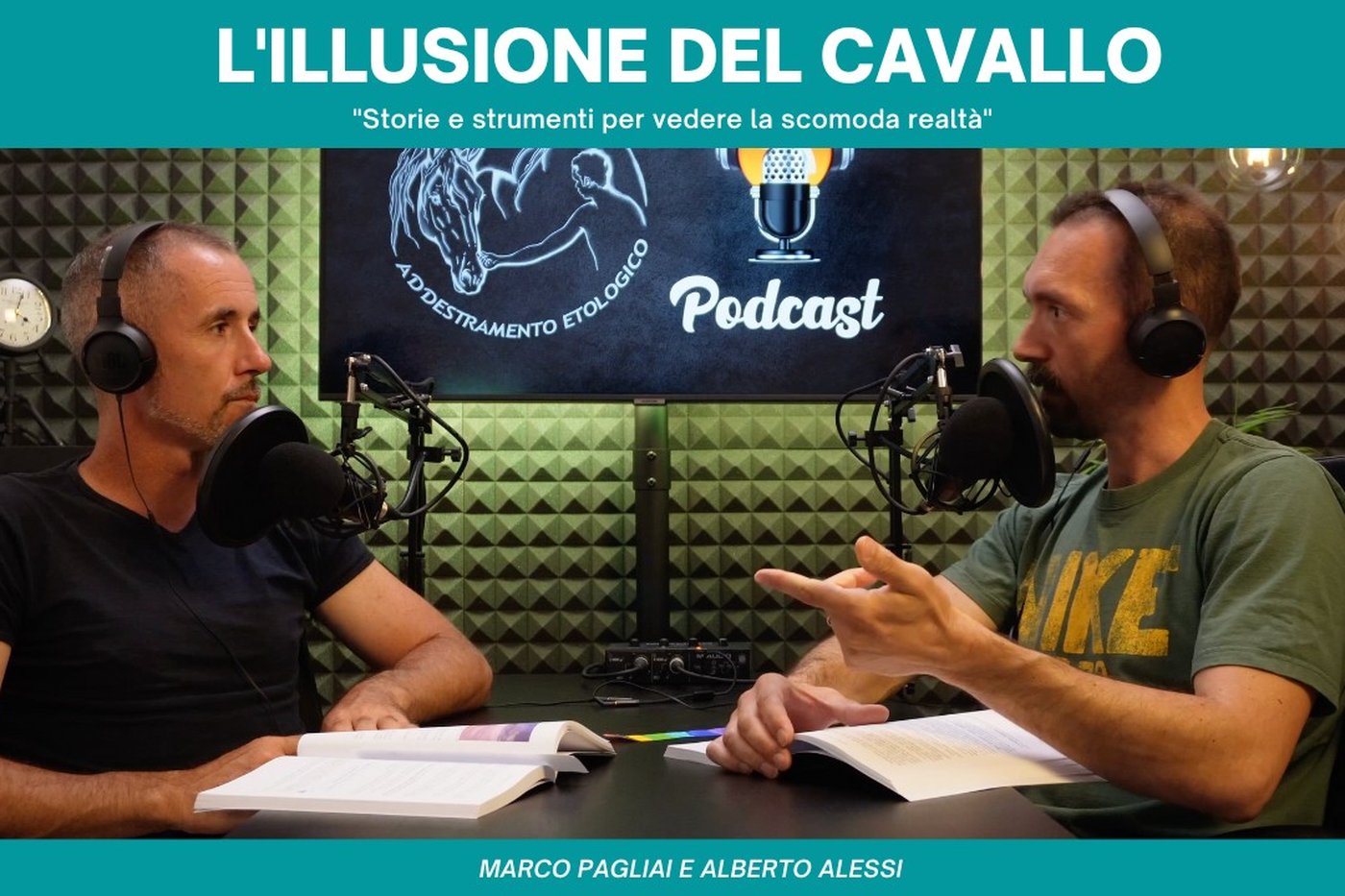
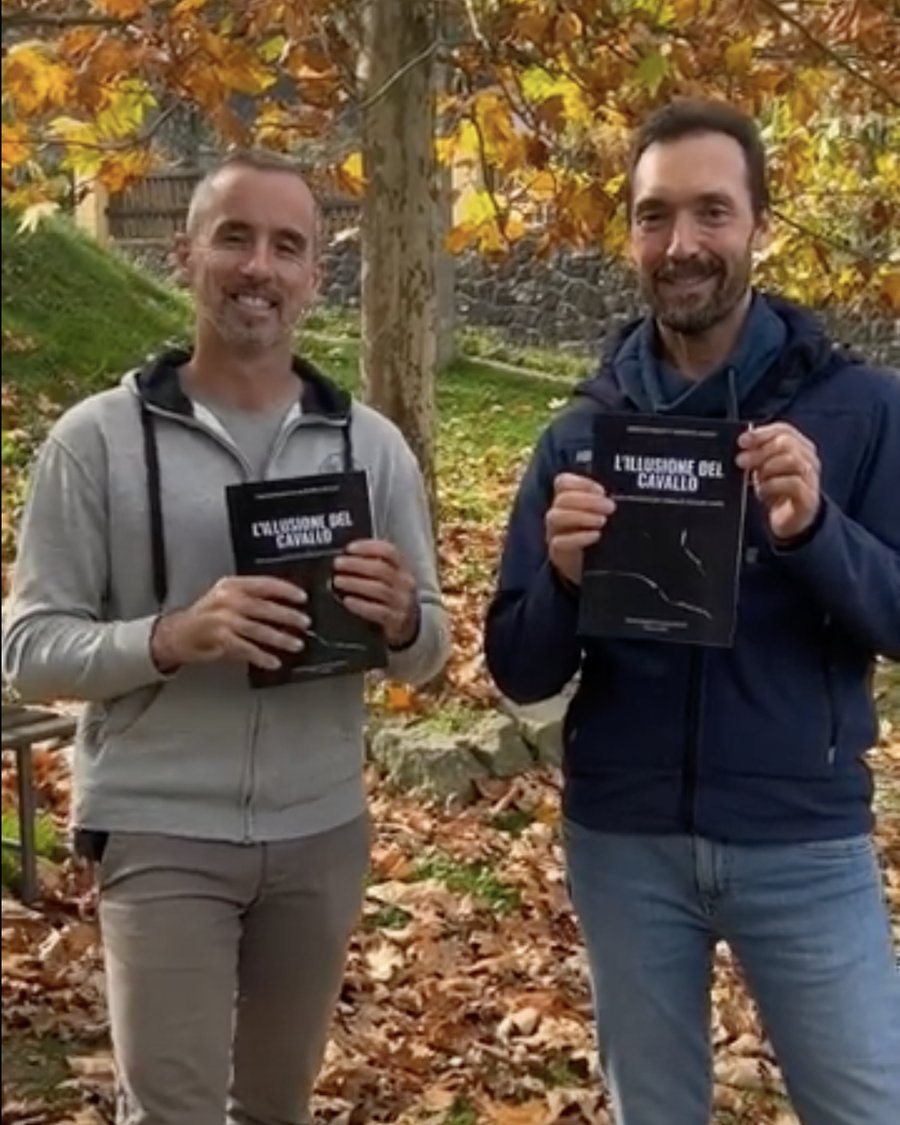
Book: L'illusione del cavallo

«Stories and tools to see the uncomfortable reality». Co-author, with Marco Pagliai (2022).

Podcasts and outreach

Formats and podcasts on the human-horse relationship, such as Scienza in scuderia and Horse Training Analysis, L'illusione del cavallo podcast.

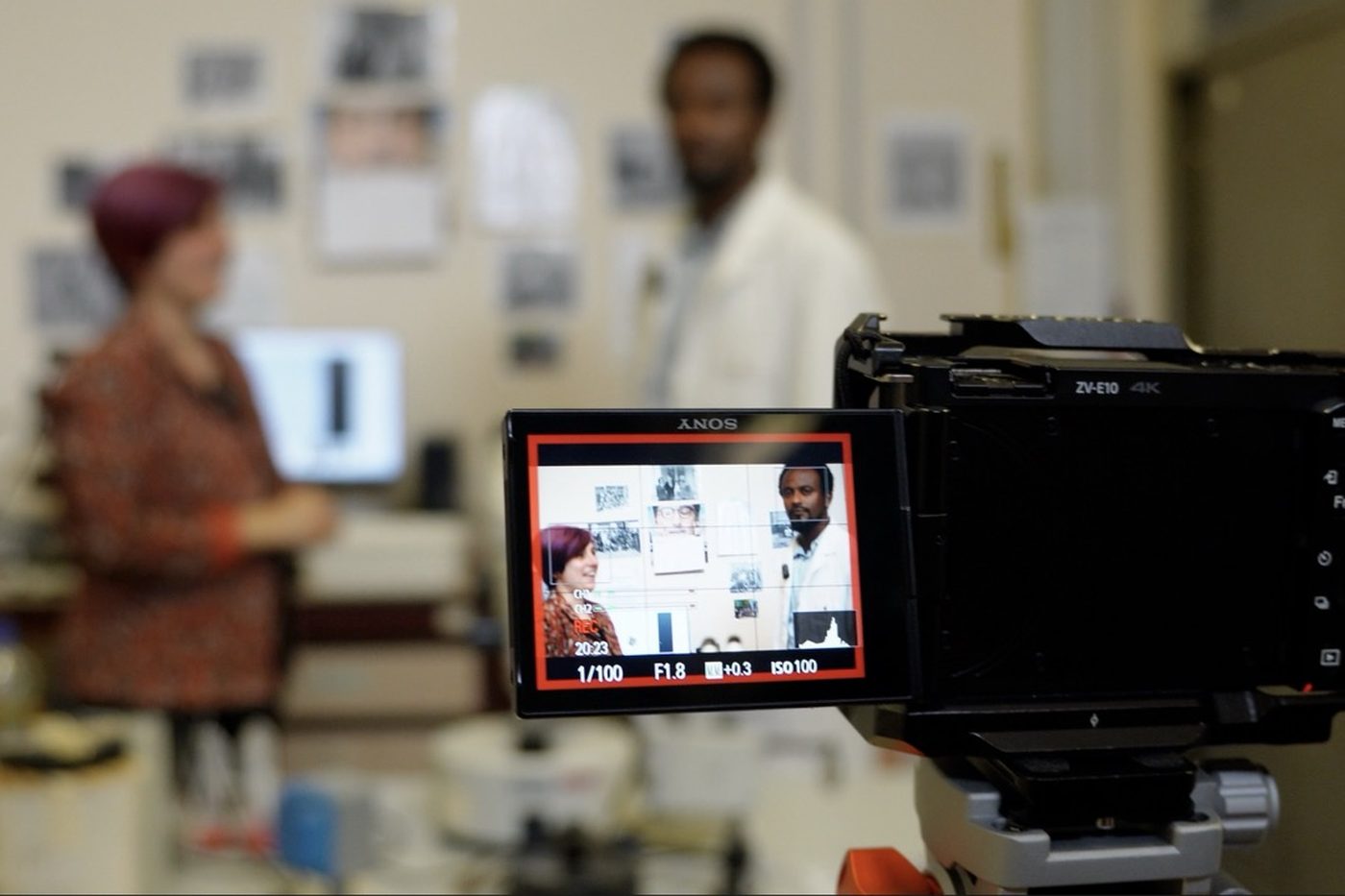
Bridges documentary

A documentary about Ethiopia made with the team of Prof. Elisabetta Palagi, Department of Biology at the Università di Pisa.

Fairs, courses and shows

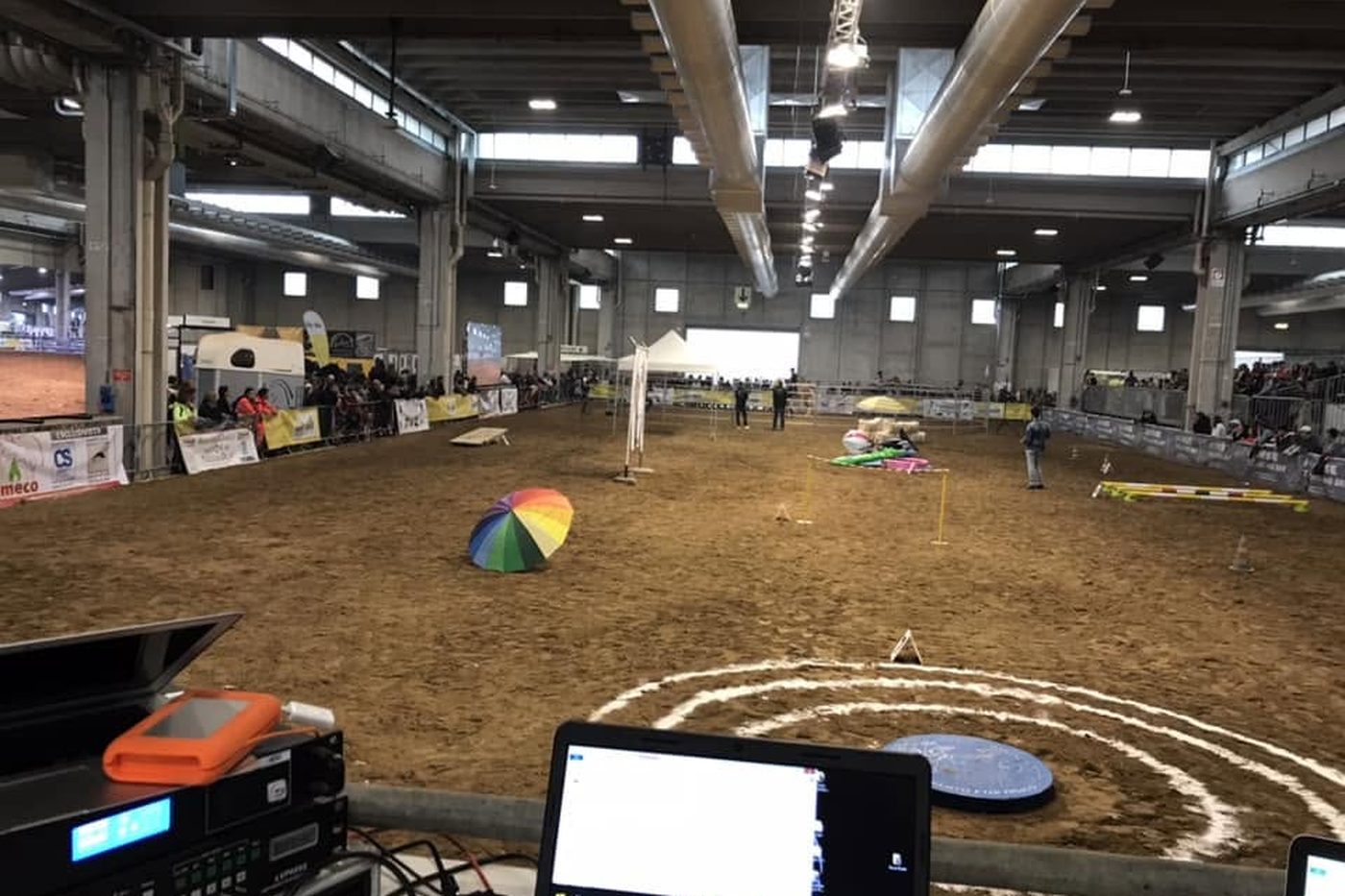
Years of events to bring these themes beyond specialist circles.

Alberto Alessi with the horse Falco at Fieracavalli
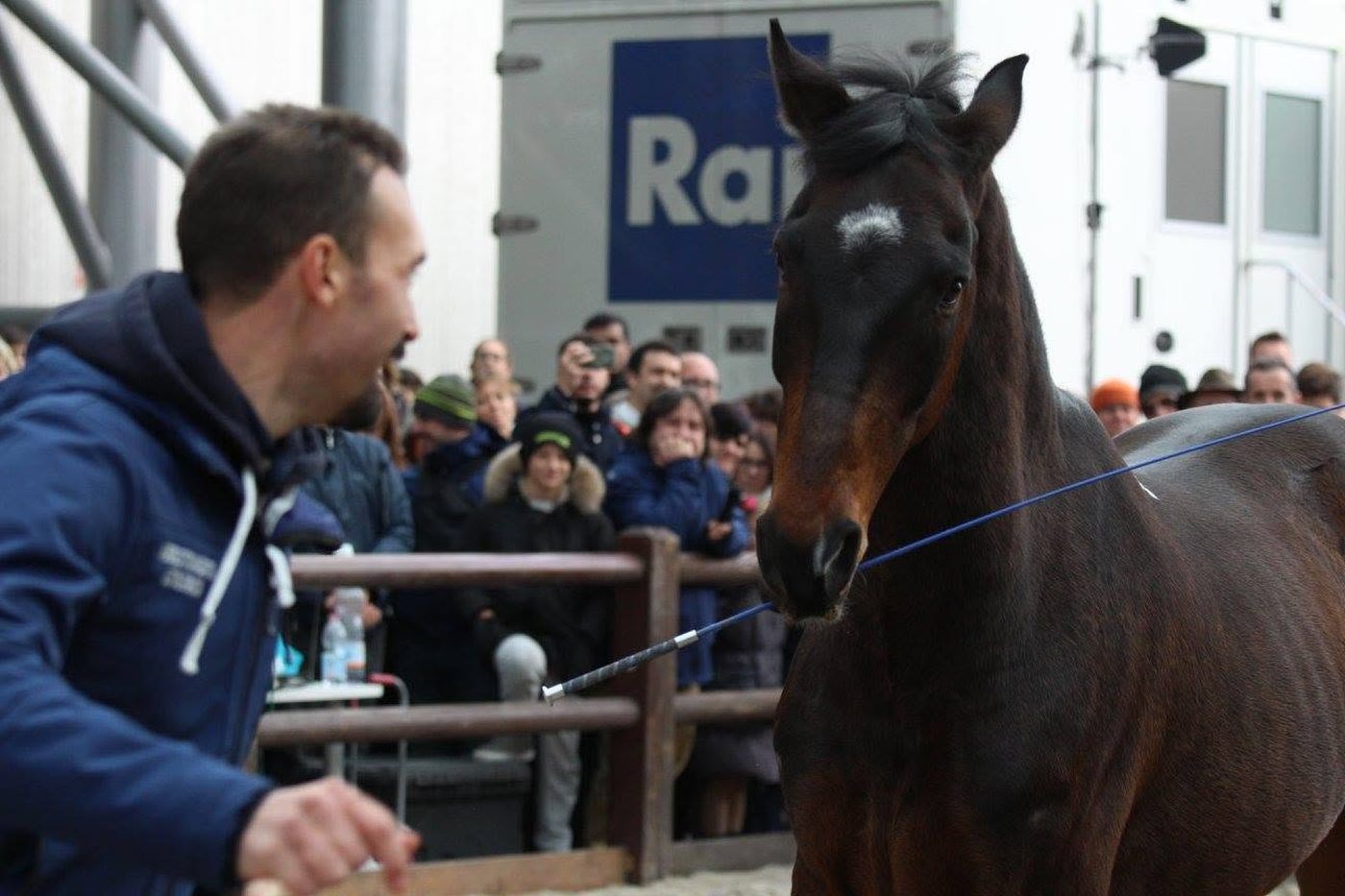
Fieracavalli 2016: our first public demonstration
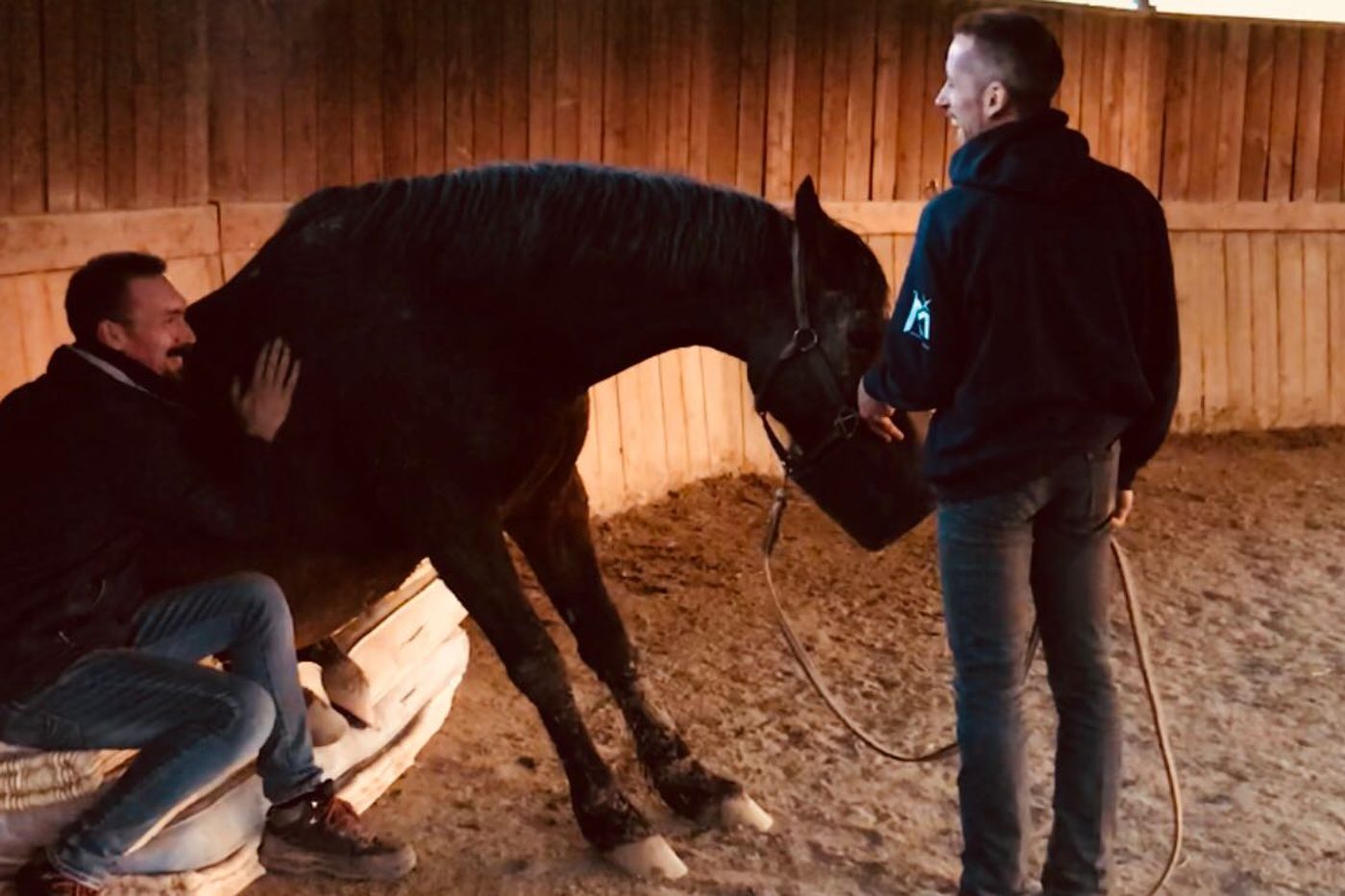
Alberto Alessi and Marco Pagliai in the arena with a horse
A working session with Falco and Marco Pagliai (2018)
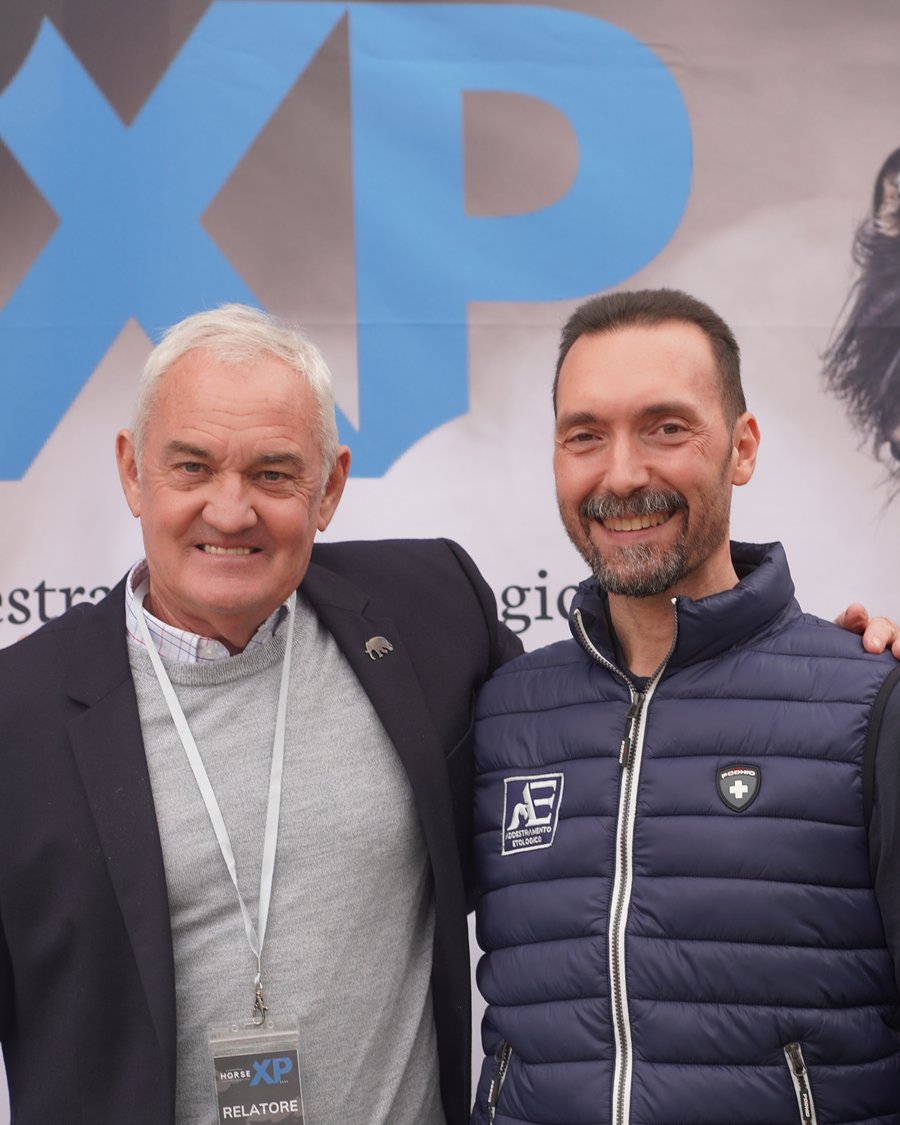
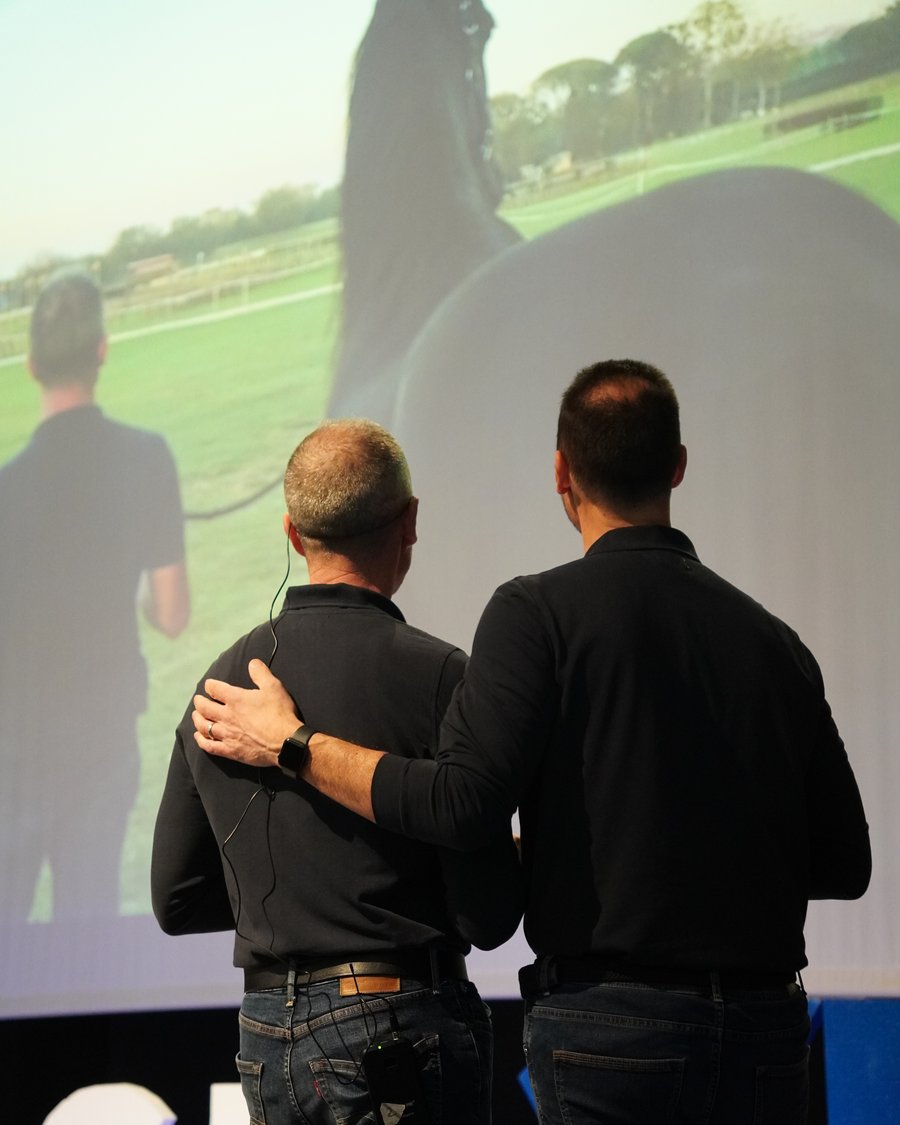
The Horse XP 2025 team
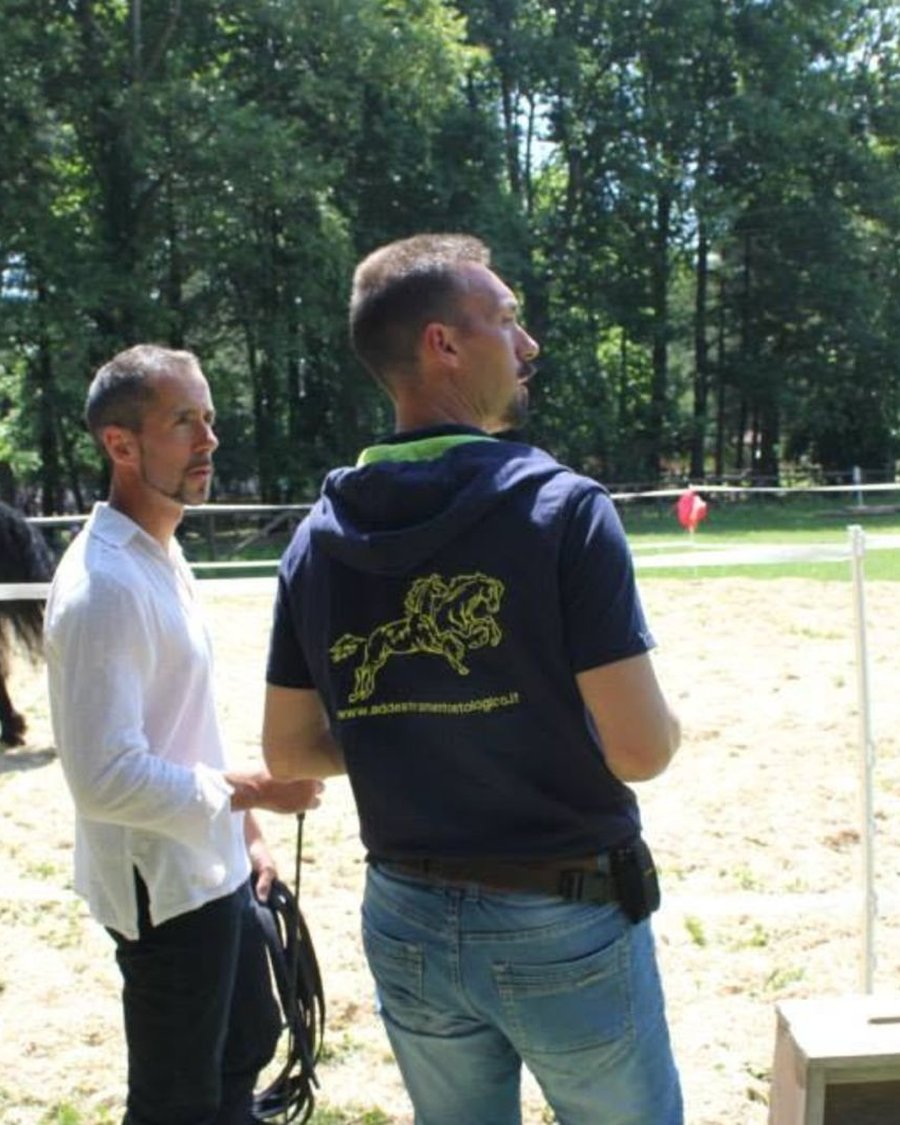
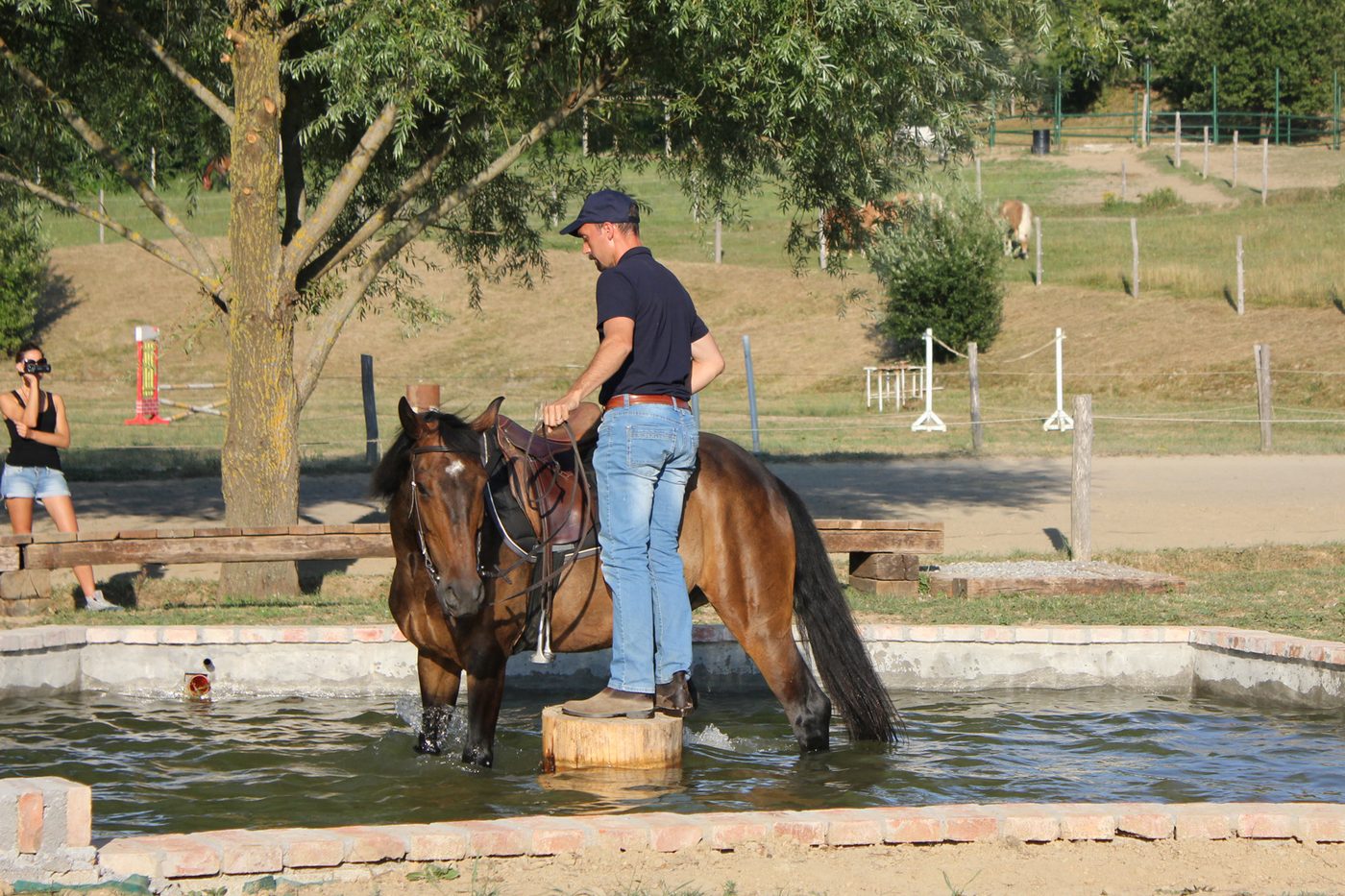
Alberto Alessi during outdoor training
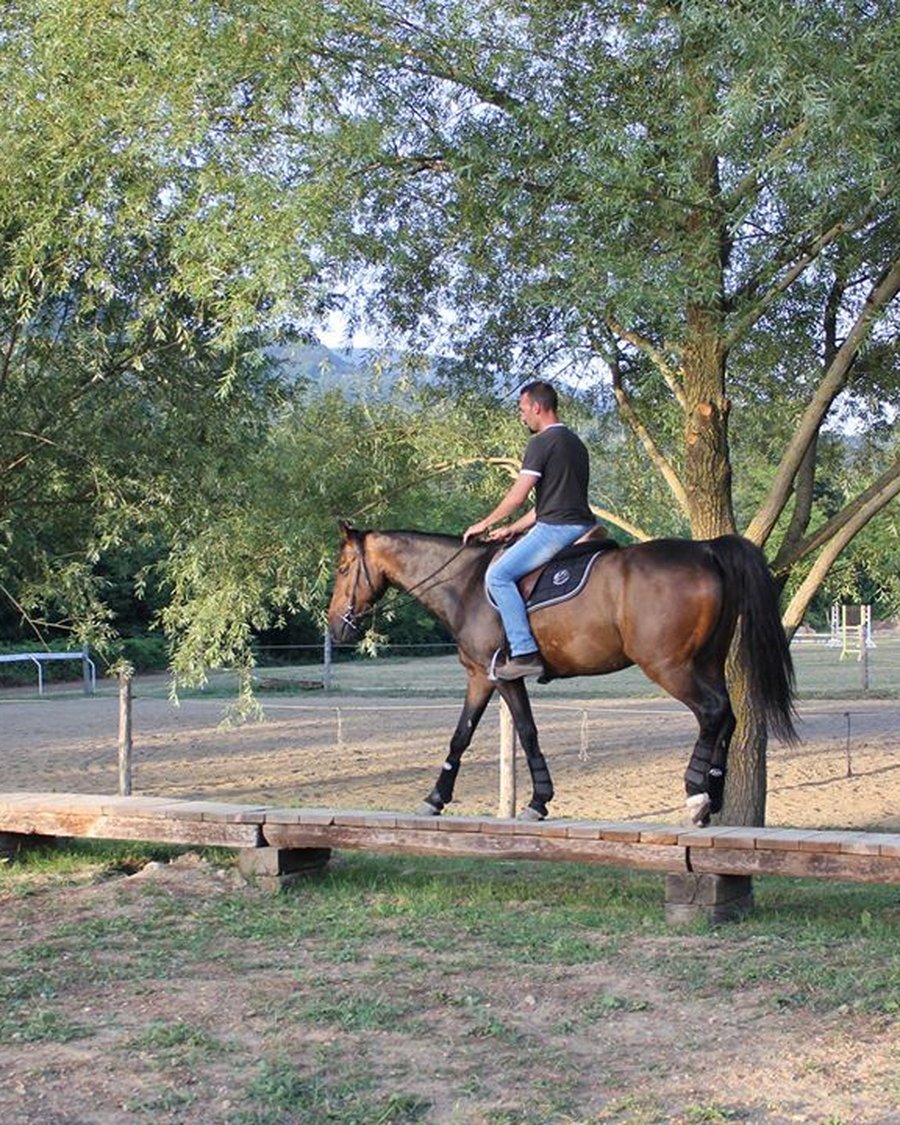
Practising in the pond at the AE Mountain Trail
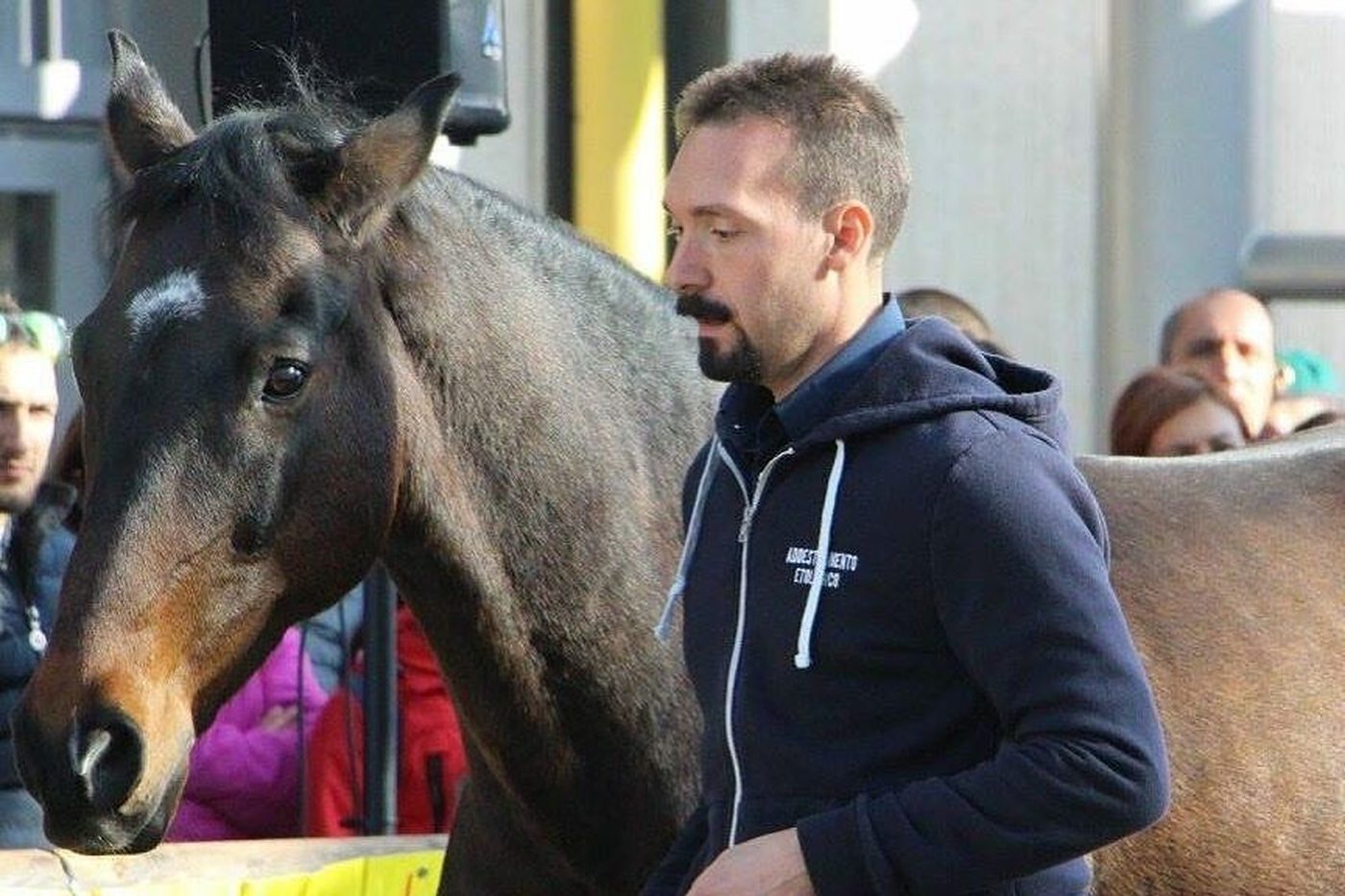
Alberto Alessi working with a horse in front of an audience
Fieracavalli 2016: our first public demonstration
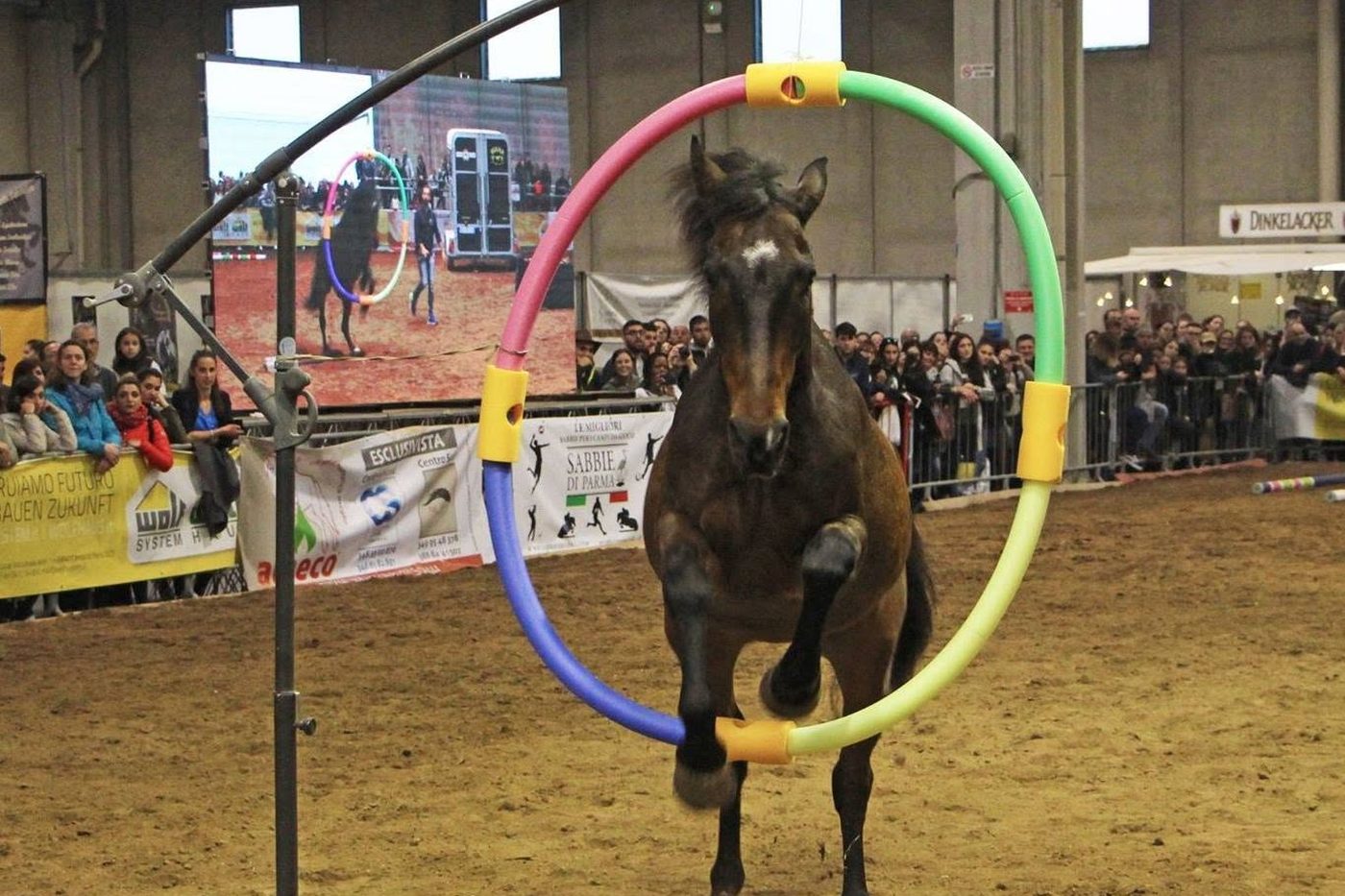
A horse at liberty during a show
Fieracavalli 2018: free jumping during the show
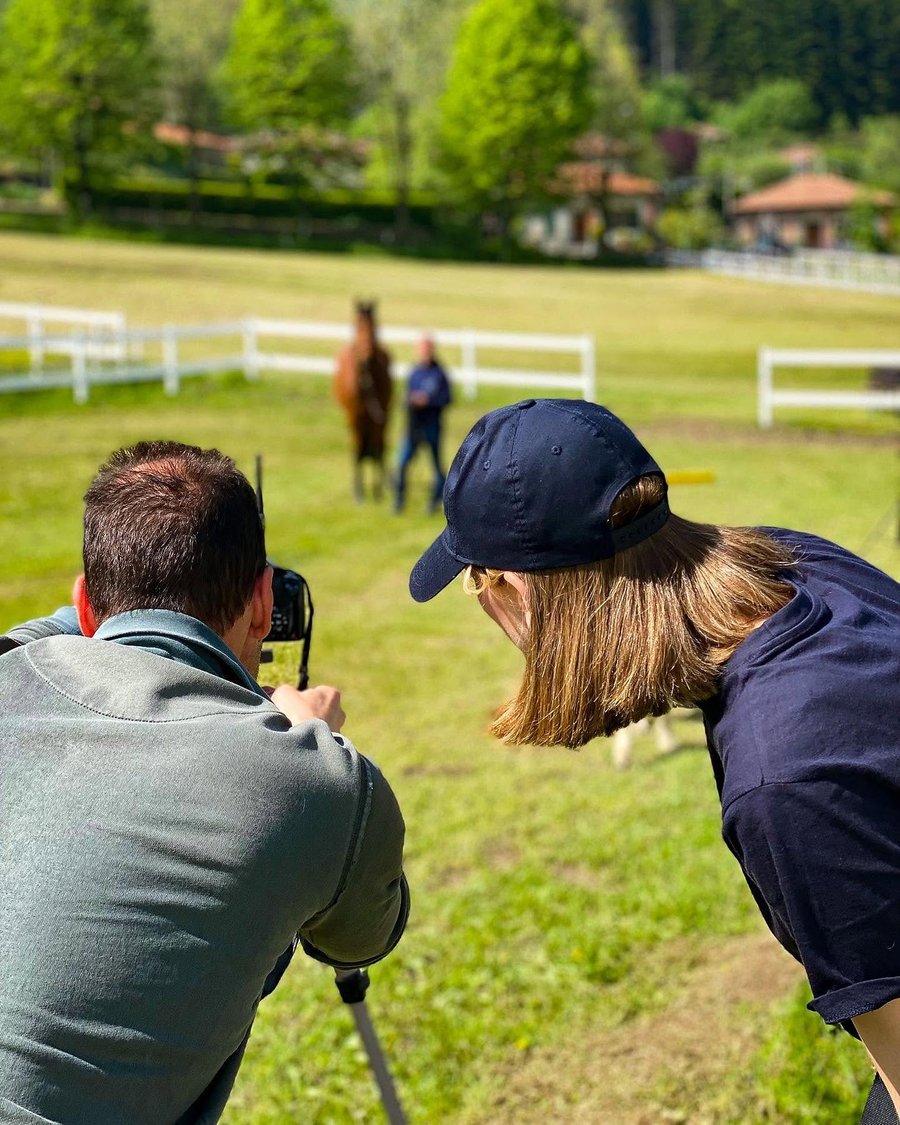
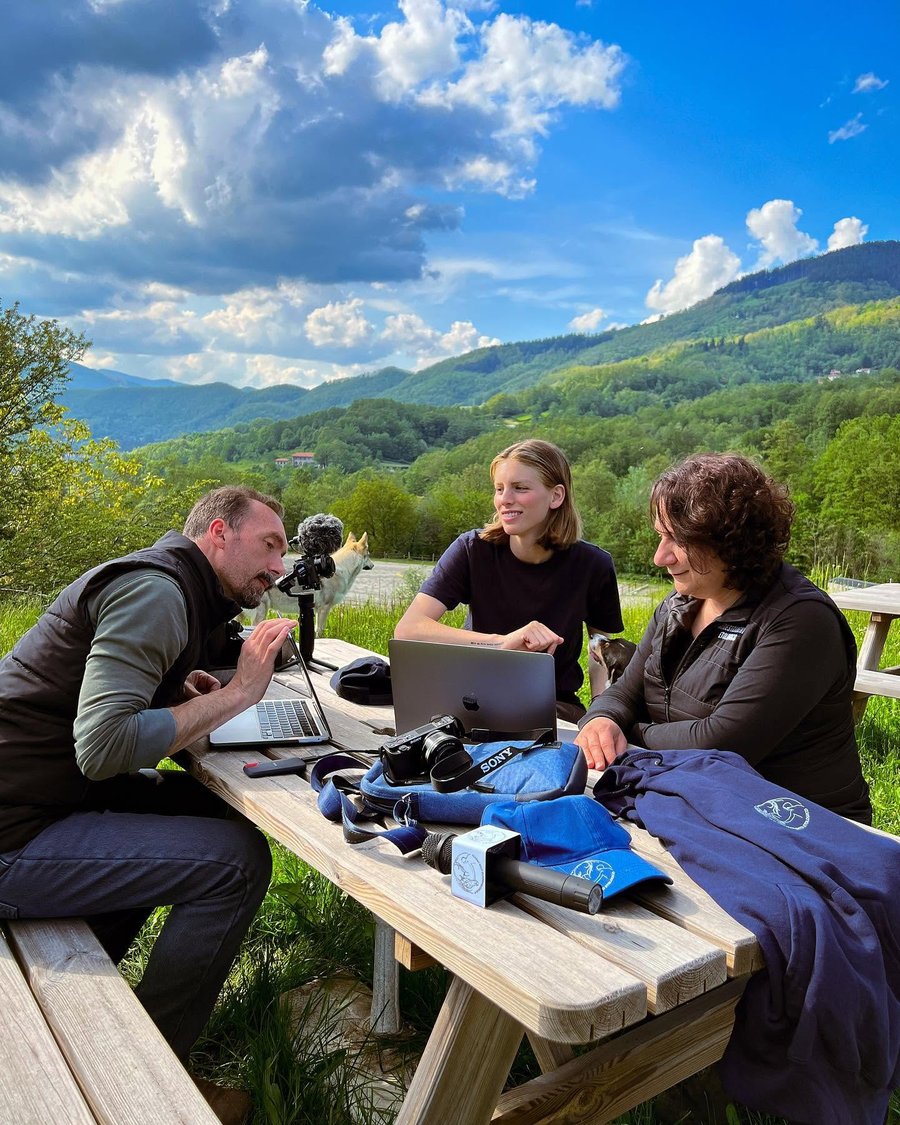
Backstage of the Bridges documentary shoot
Backstage of the Bridges documentary
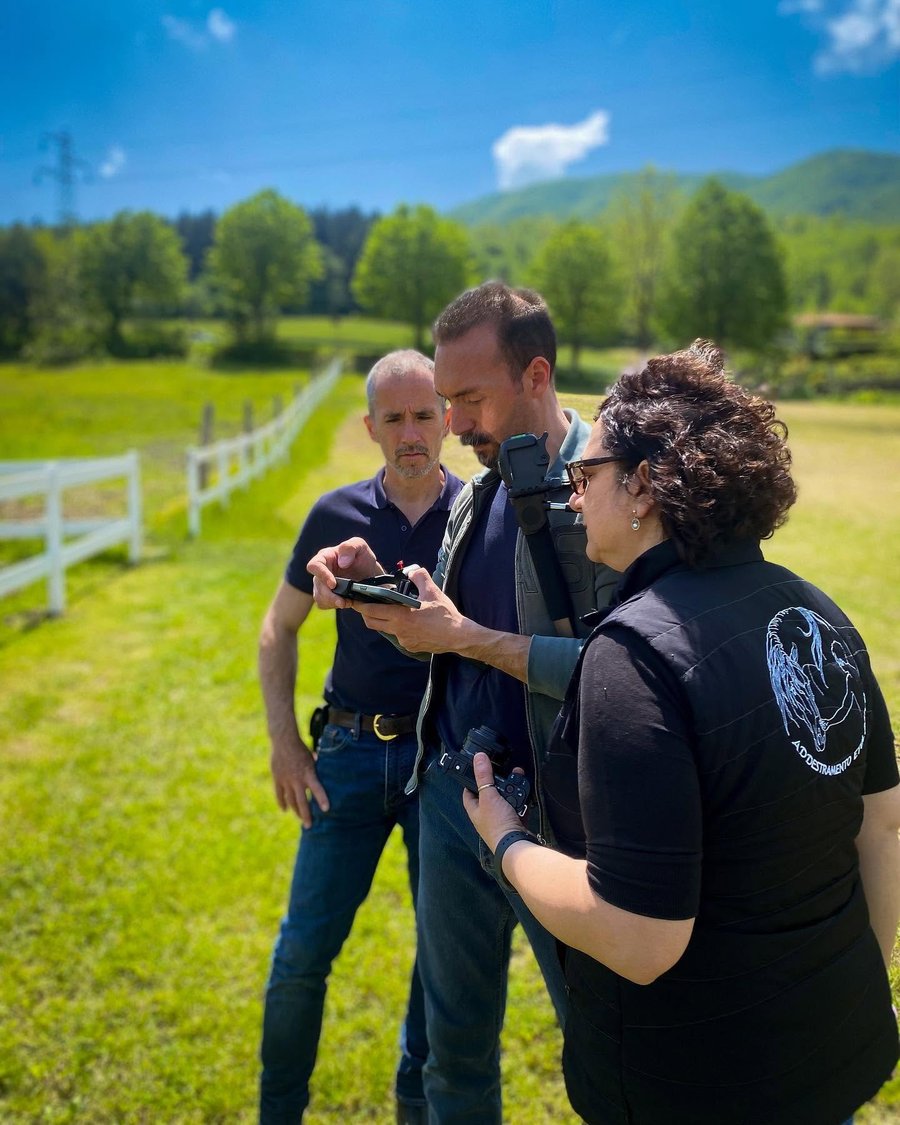
Alberto Alessi filming an interview
Behind the scenes of the Bridges shoot
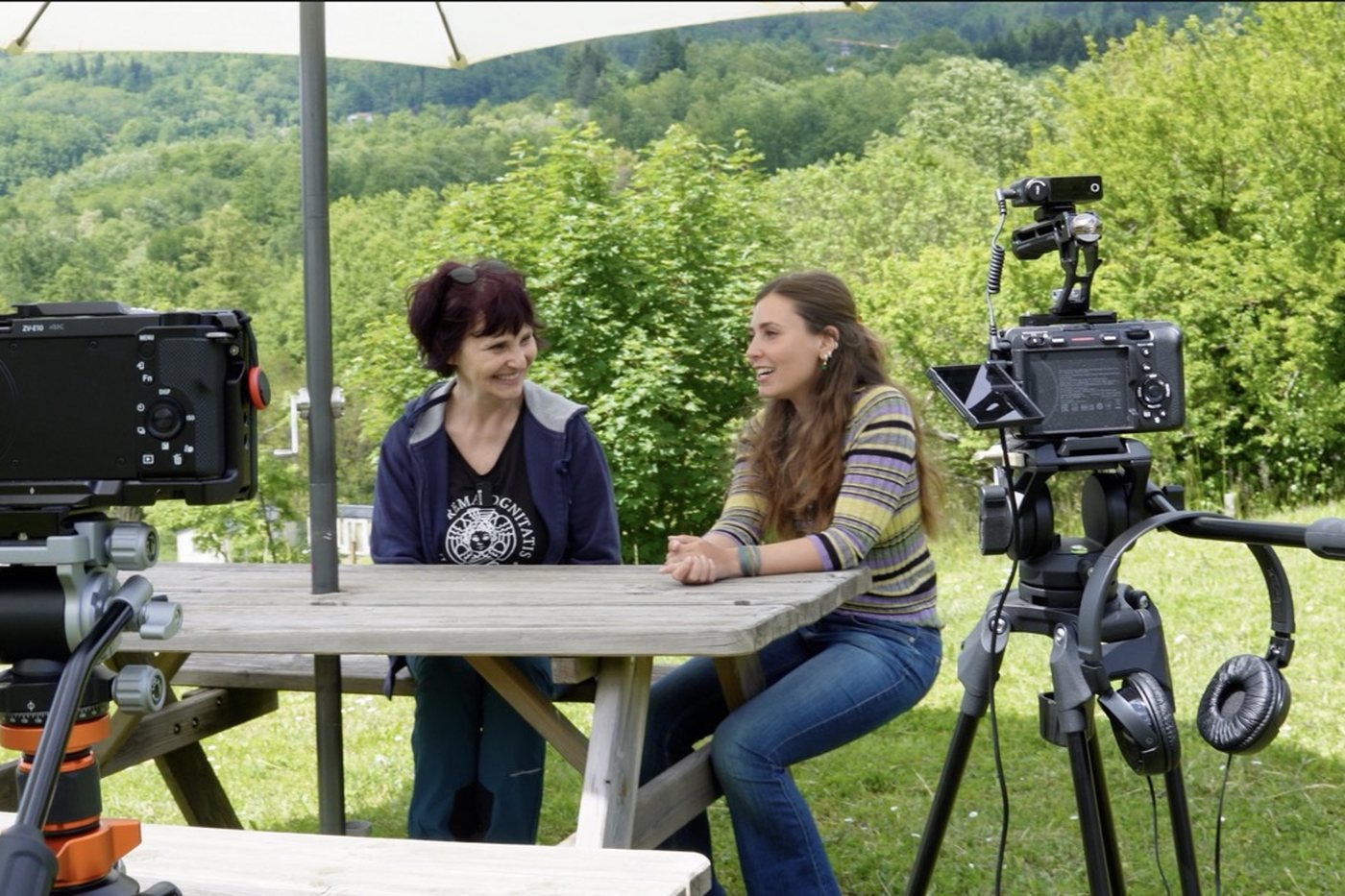
Interview with Prof. Elisabetta Palagi during filming
Interview for Bridges with Prof. Elisabetta Palagi and Alice Galotti
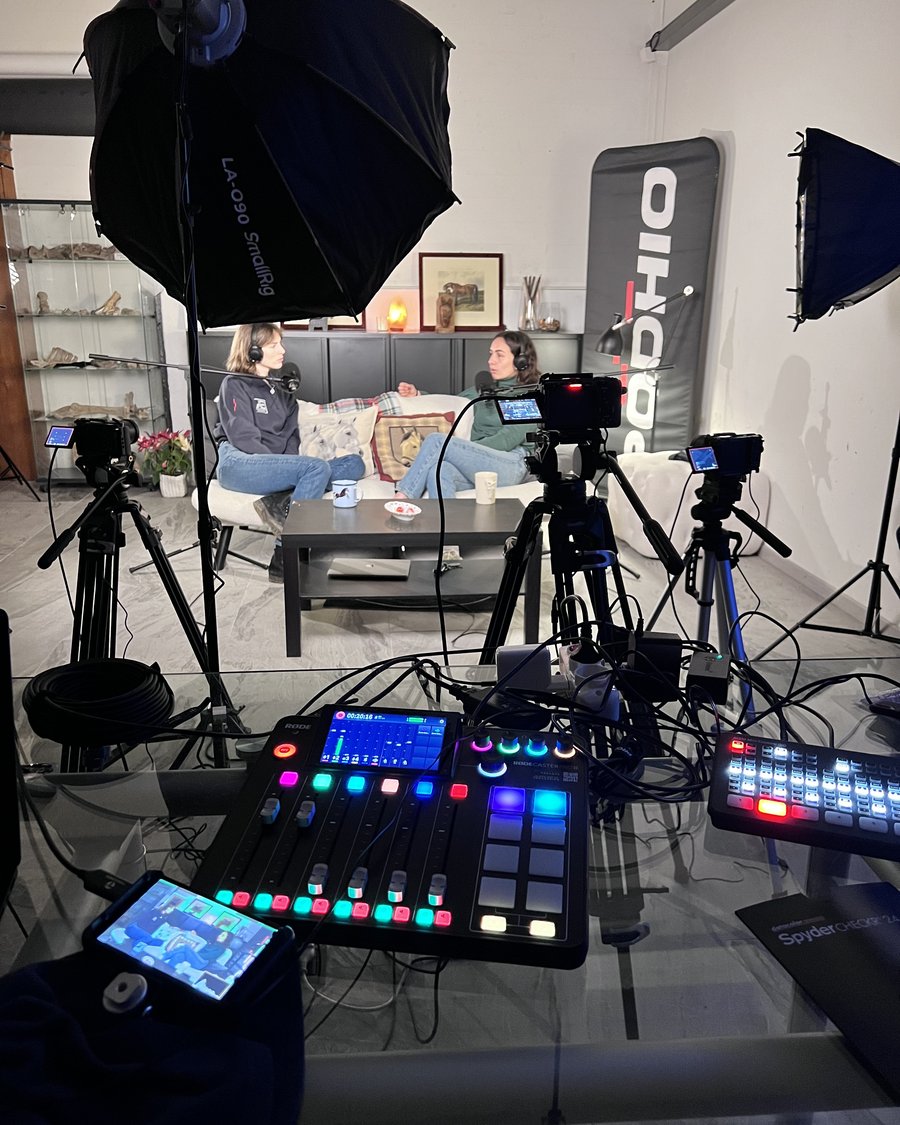
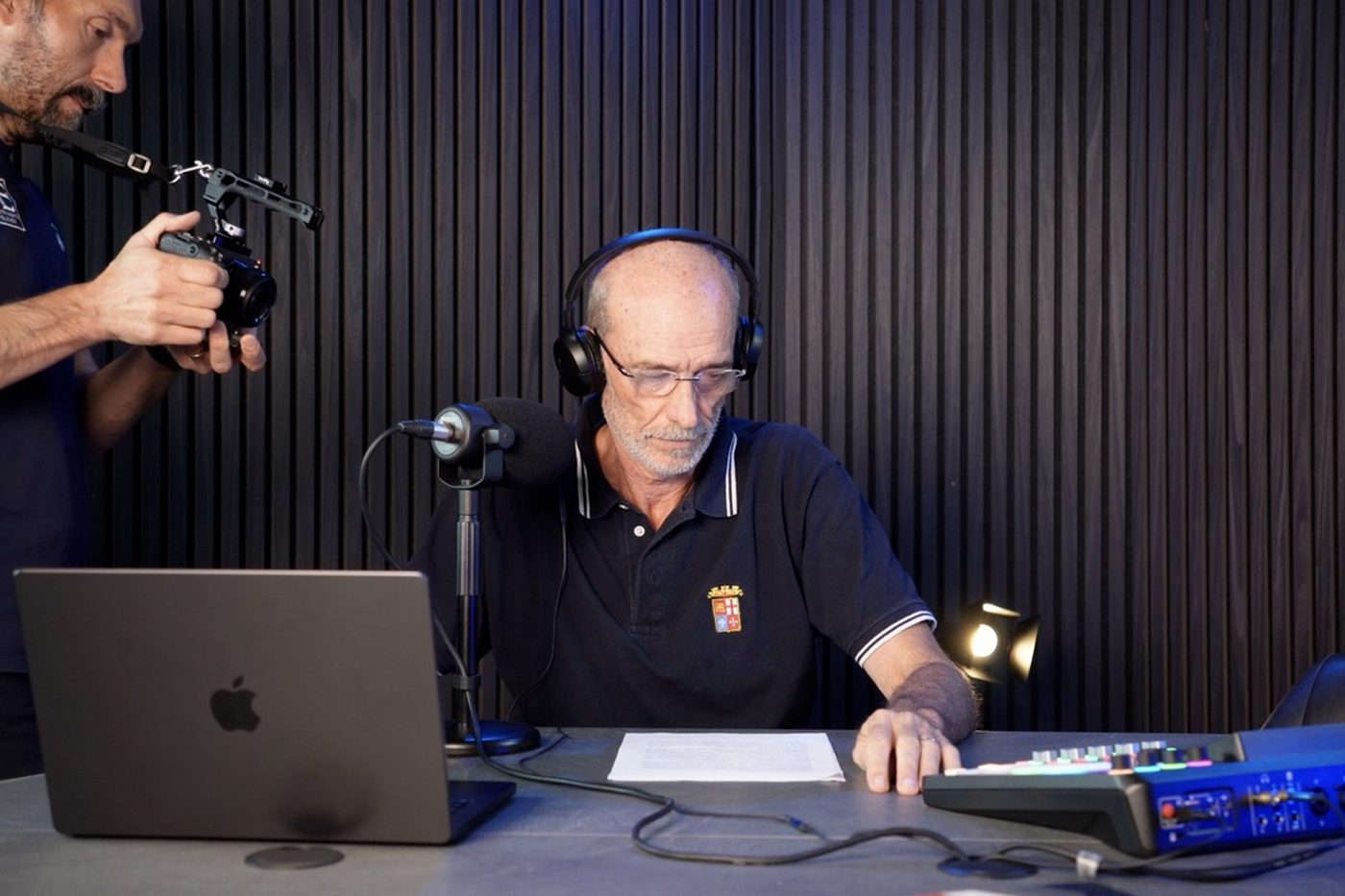
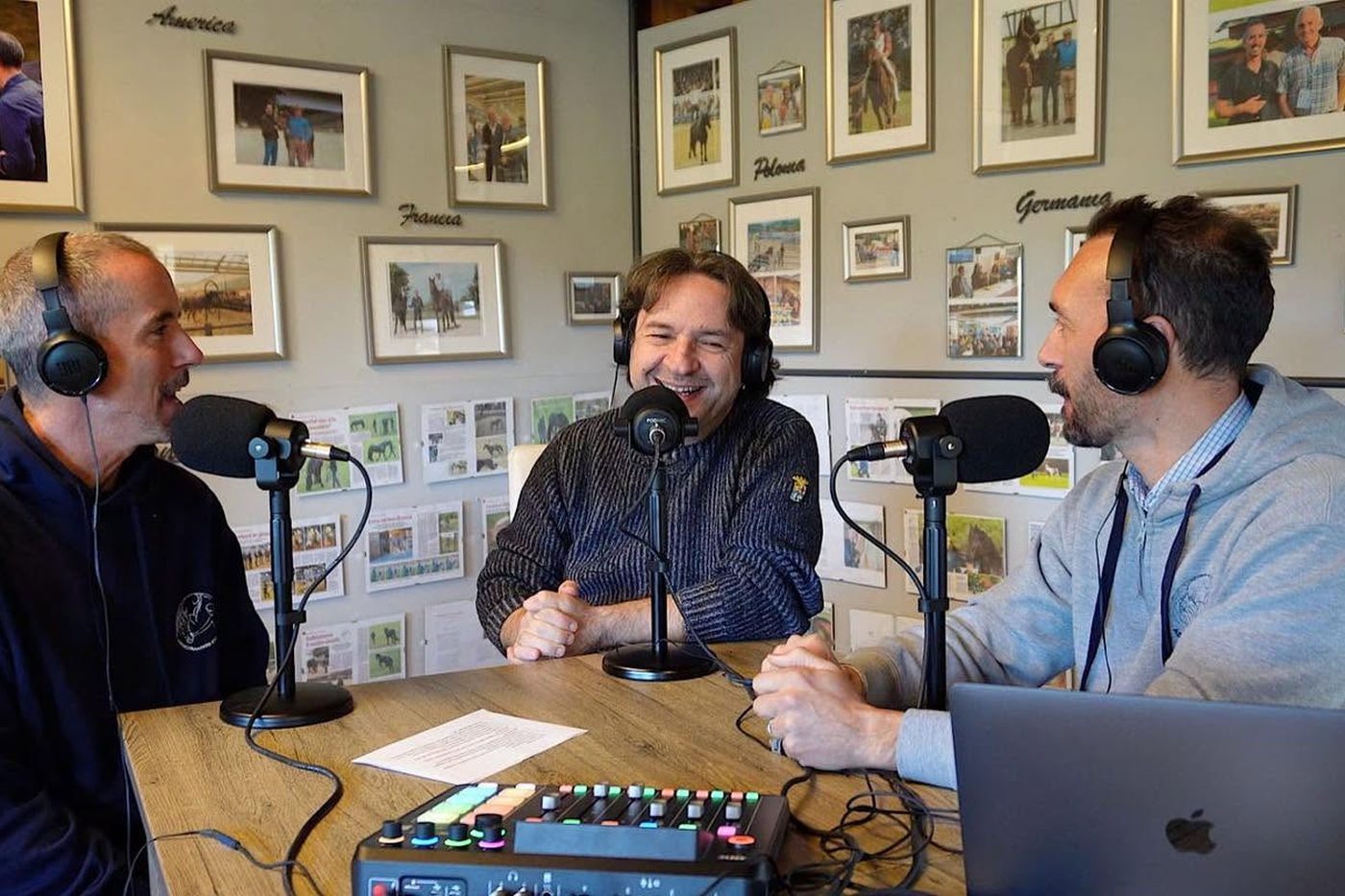
Recording a podcast about the human-horse relationship
Sharing the human-horse relationship
Behind the scenes of a show
Behind the scenes of the AE show: Horse Training Fieracavalli 2018
Horse XP 2025, proceeds supporting research
Horse XP 2025: proceeds fund research
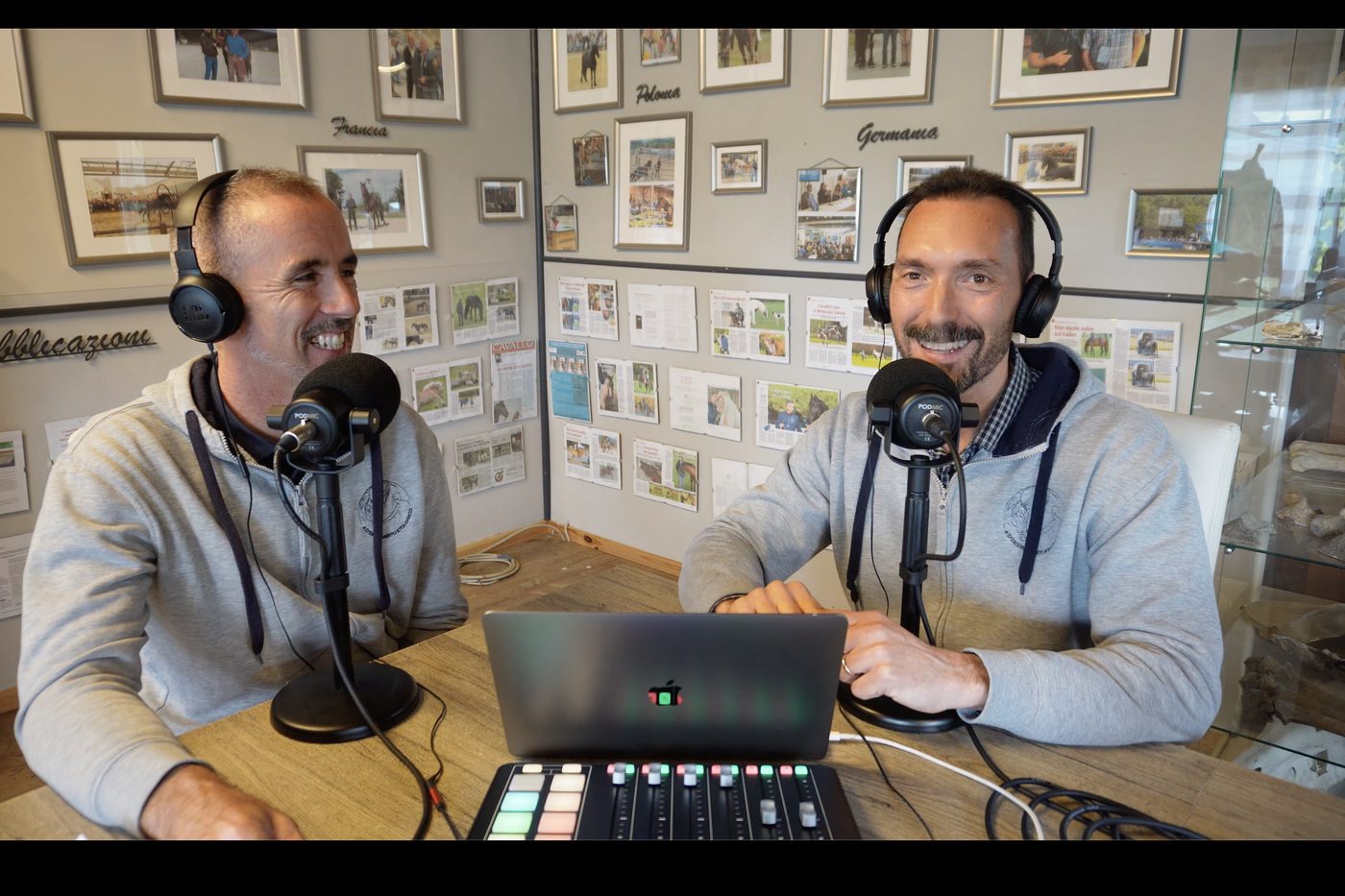
L’illusione del cavallo podcast with Marco Pagliai and Alberto Alessi
Recording a podcast with a guest
The podcast, with Marco Pagliai and Prof. Paolo Baragli
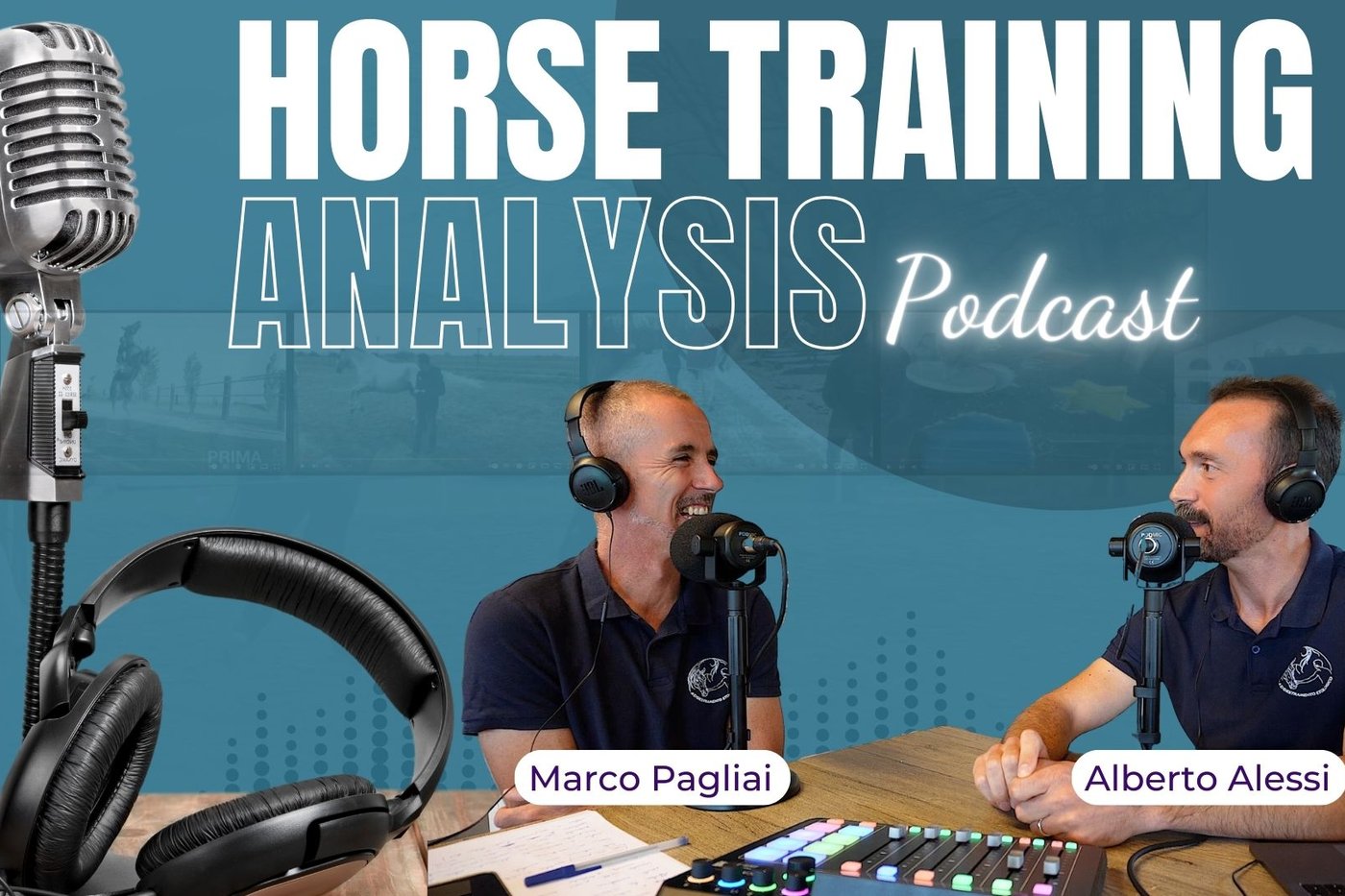
Horse Training Analysis podcast with Marco Pagliai and Alberto Alessi
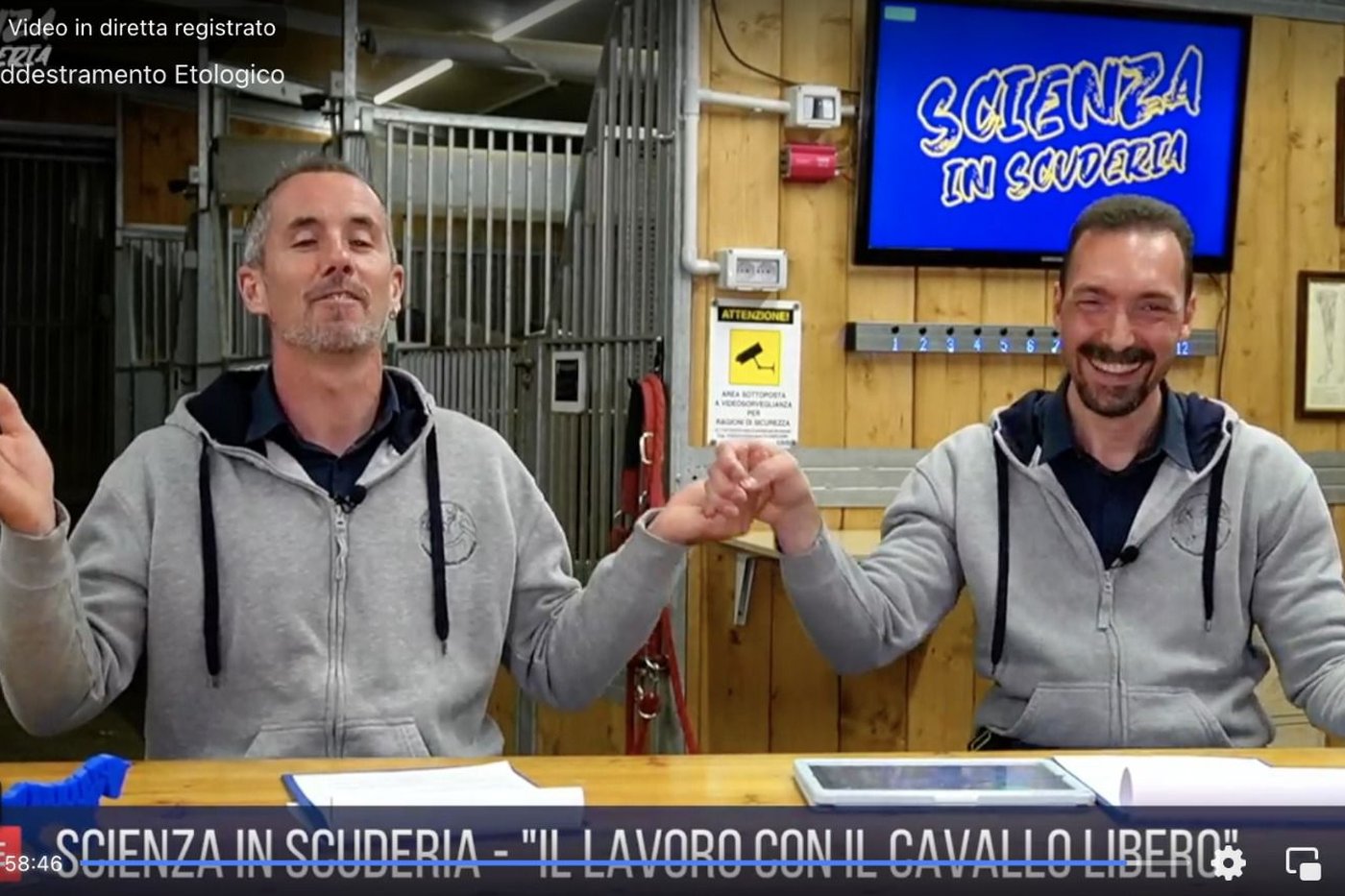
Scienza in Scuderia, the format about working with horses
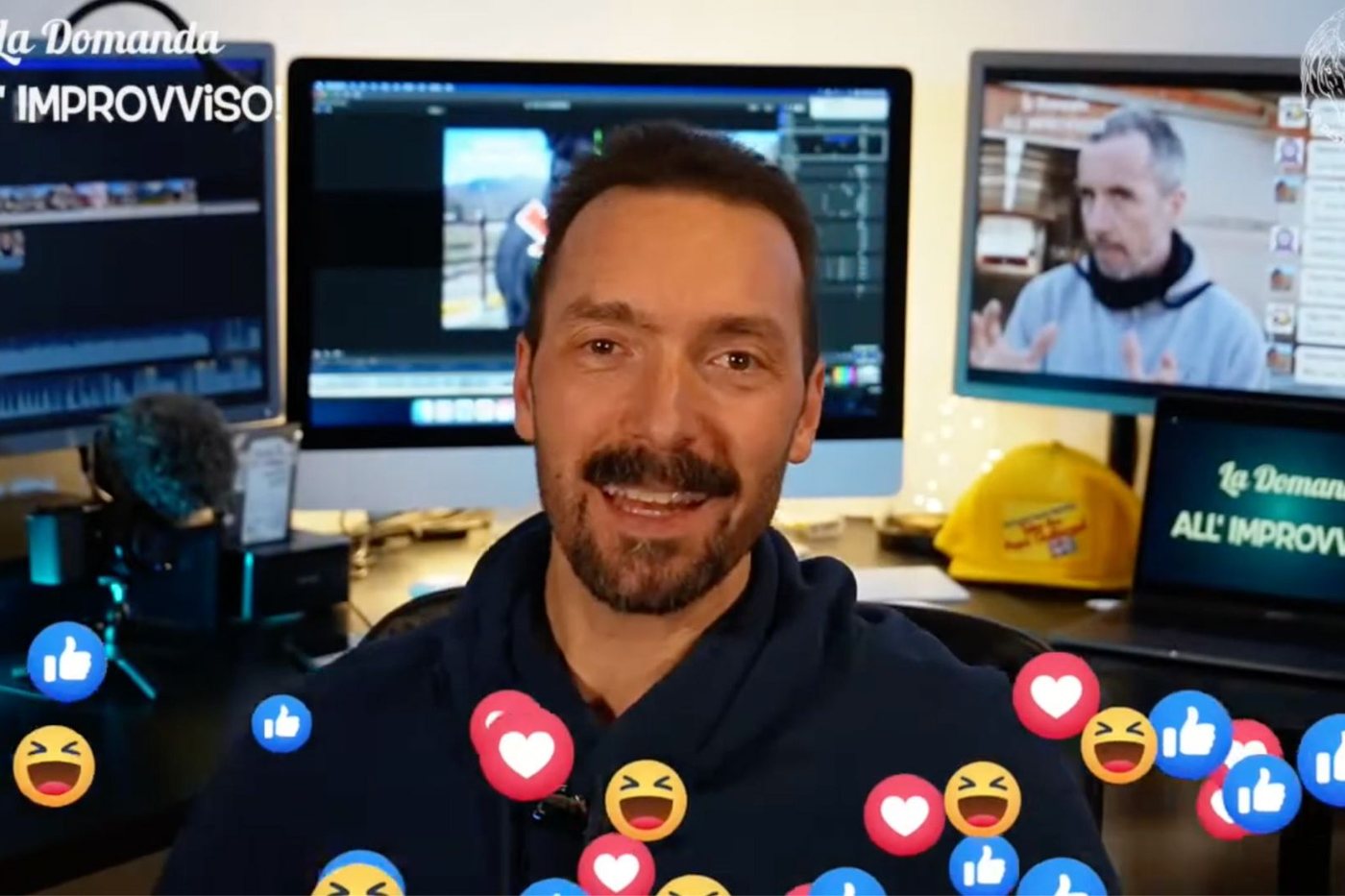
La Domanda all’Improvviso, Alberto Alessi’s format
«La Domanda all’Improvviso», an entertaining outreach format
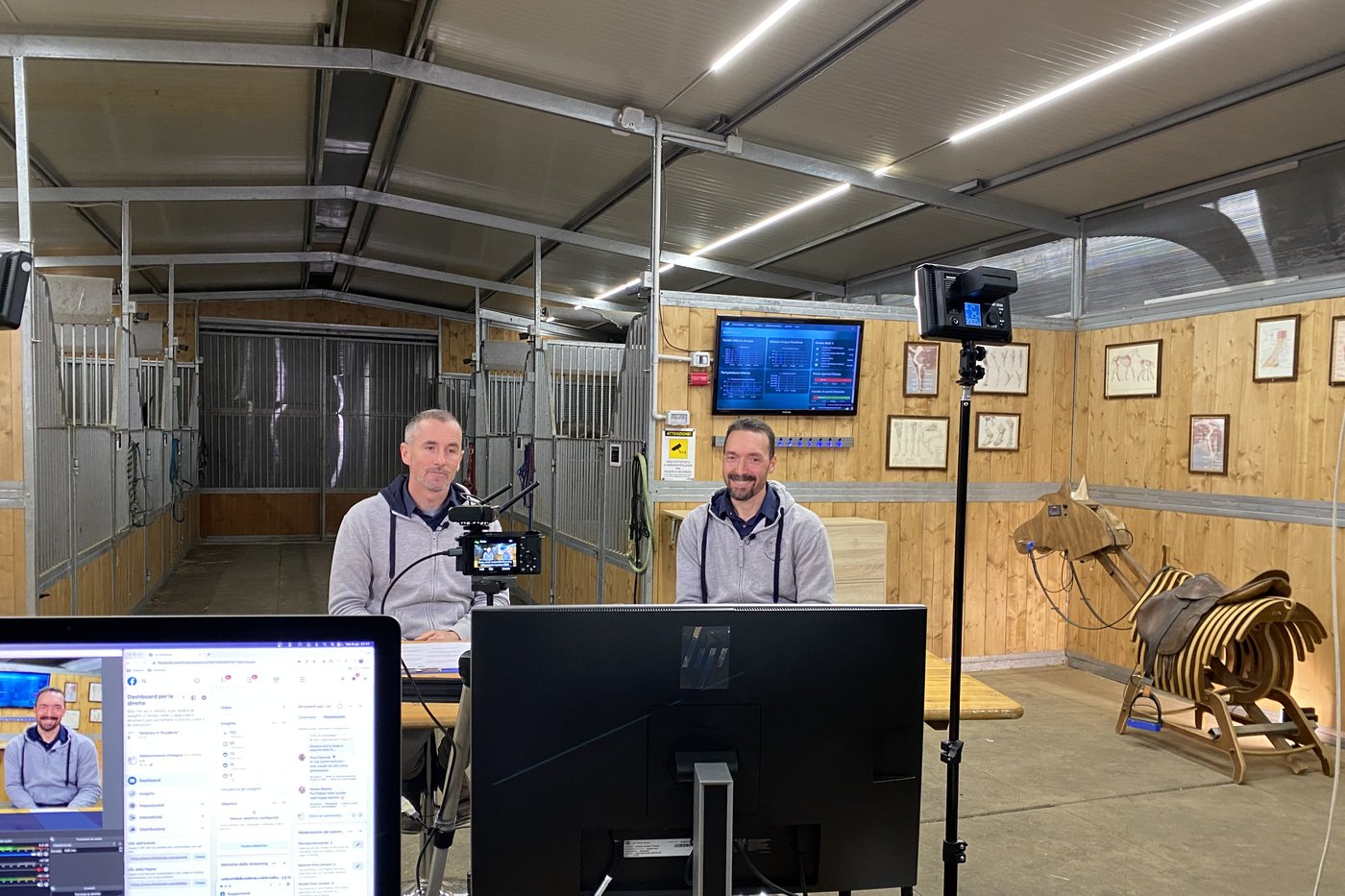
Alberto Alessi and Marco Pagliai on the set of Scienza in Scuderia
On the set of «Scienza in Scuderia», with Marco Pagliai
Alberto Alessi in the stables
In the stables, among the horses
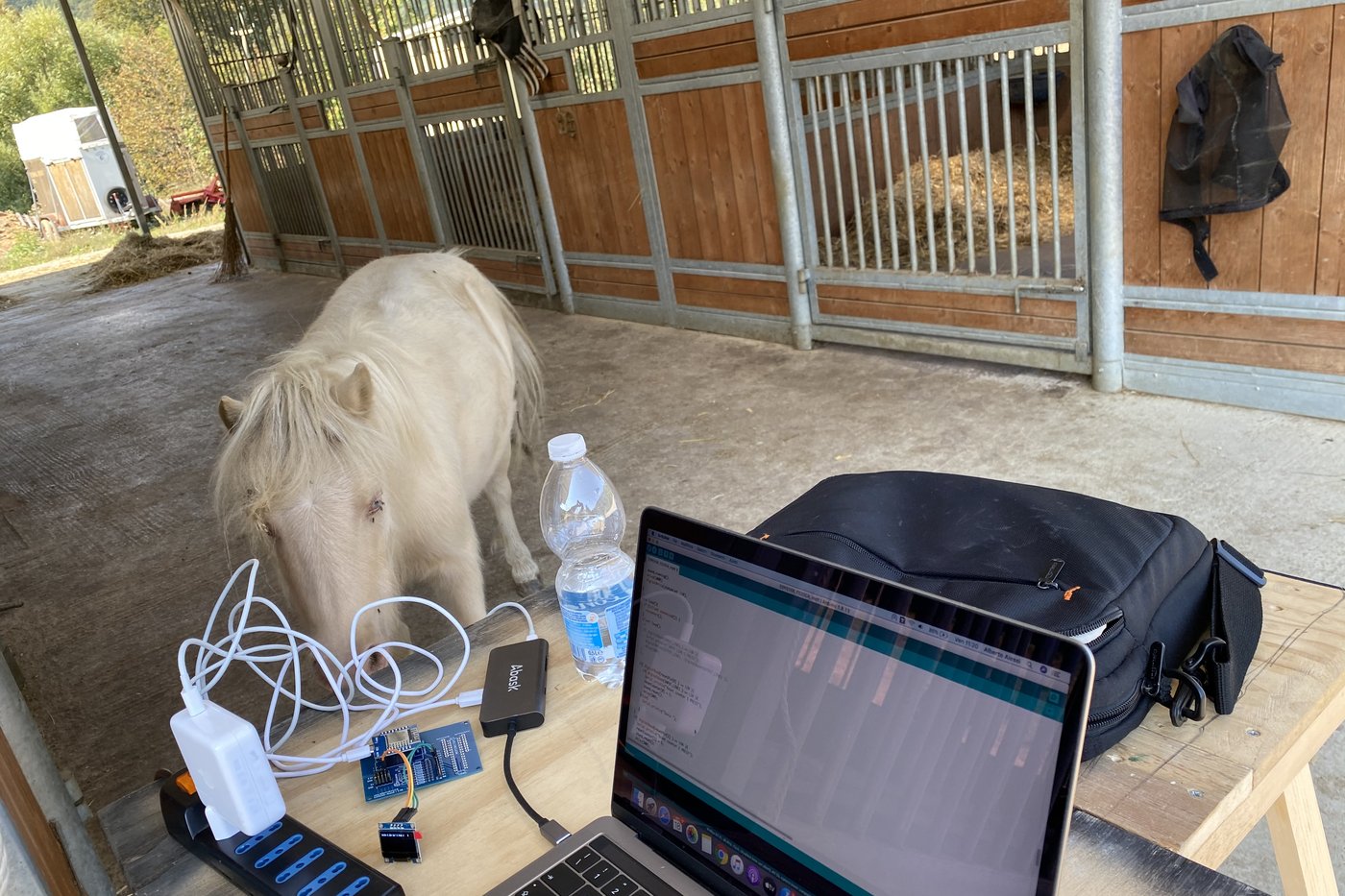
At work in the stables with a pony
At work in the stables with Boss Oliverino
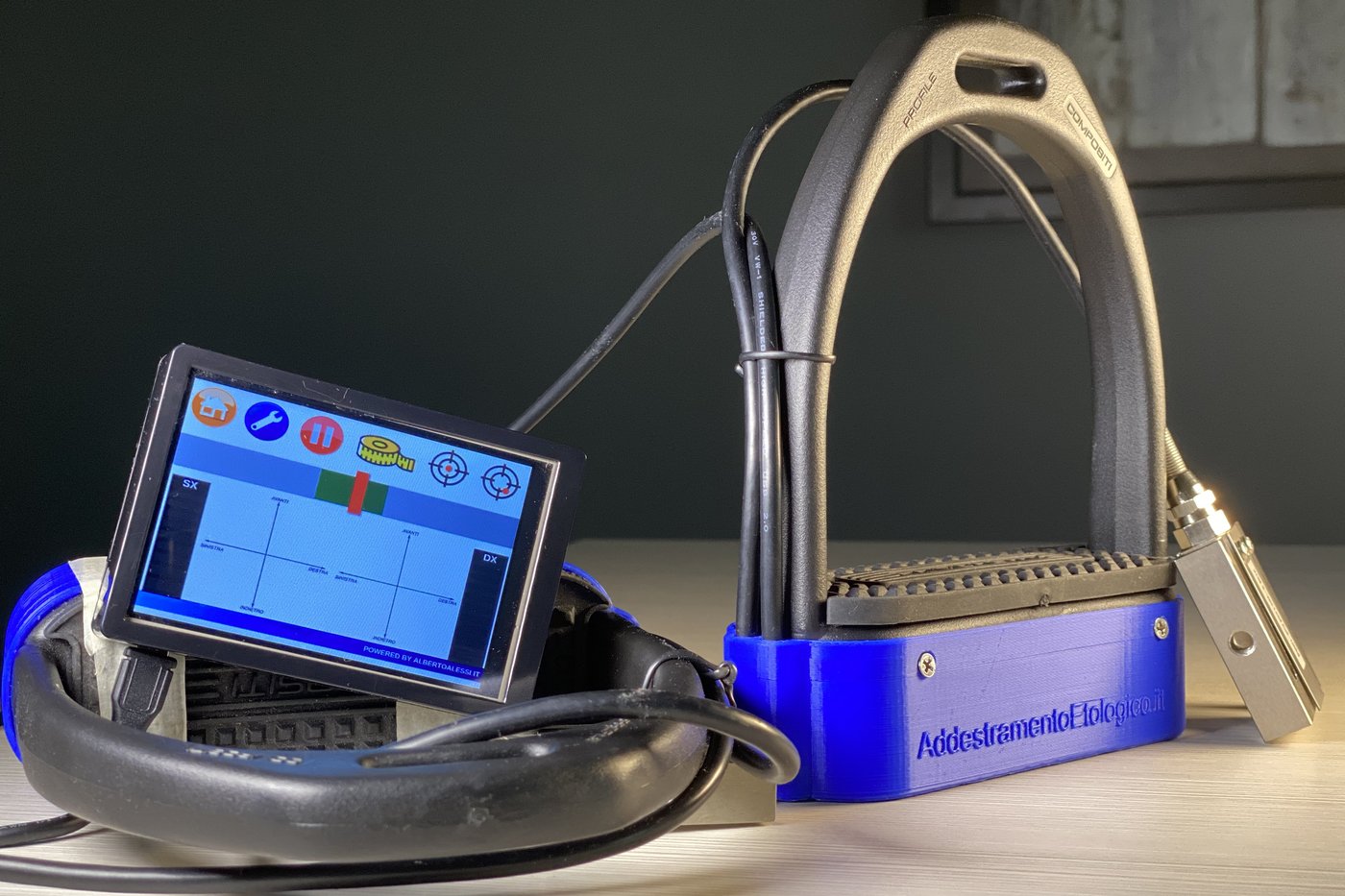
The instrumented stirrup by Addestramento Etologico
Research and innovation: measuring the weight on the stirrups
The project's partner

Addestramento Etologico®

A multidisciplinary approach that joins training techniques with scientific knowledge, ethology, learning and neuroscience, placing the horse's mental well-being at the centre. Over the years it has always been active in research, training and field events to share its principles.

It grew out of the path shared by Alberto Alessi and Marco Pagliai, a trainer specialised in the rehabilitation of horses with complex issues. It is at their centre that the stories in this book found a listening ear, and a second chance.
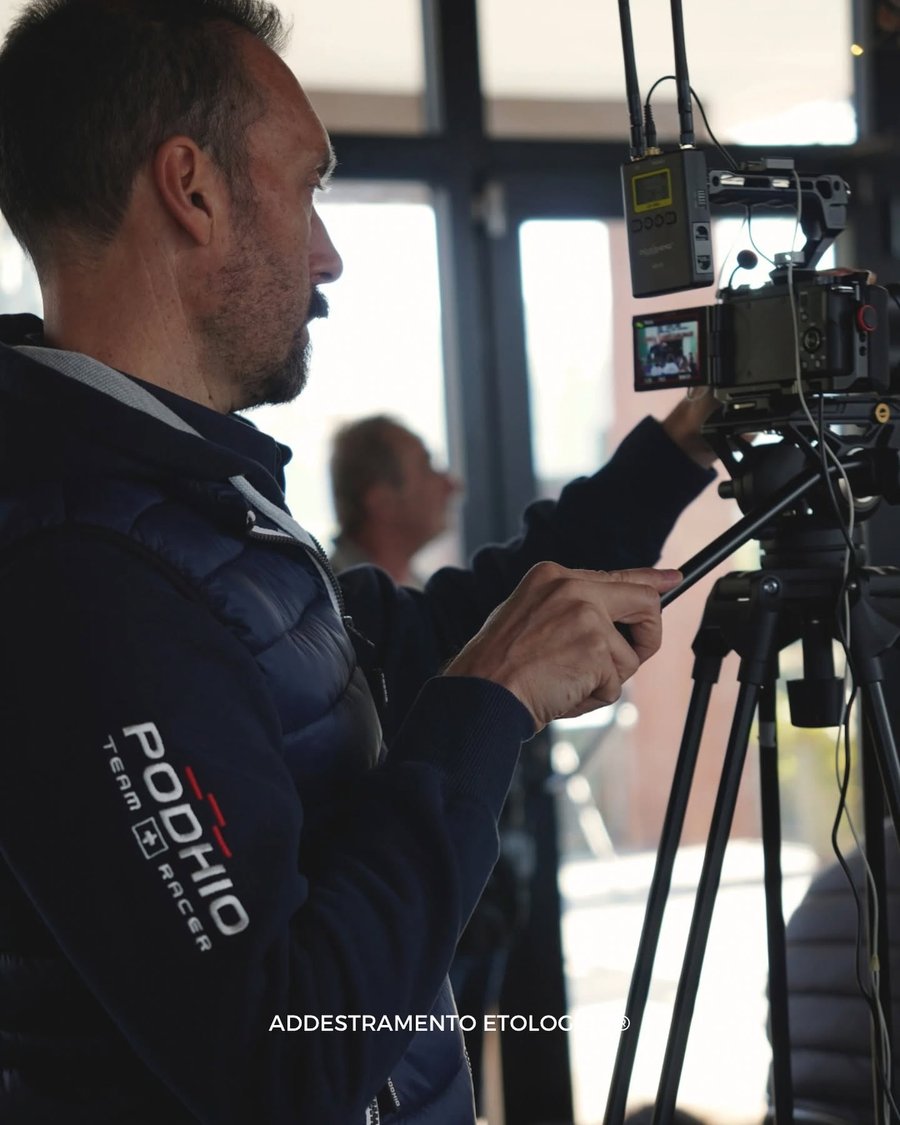
«To bring innovation, understanding and consideration of the horse into the equestrian world, so that horses can gain the greatest benefit from it.»

The mission of Addestramento Etologico®
Where to find it

Available on Amazon

Every copy funds the documentary.

Beyond the book

The journey doesn't end with the last page.

The book is the first visible step of a wider path. From here the documentary comes to life, and you'll be able to follow its making step by step: the progress of the work, the backstage, the narrative choices and the encounters with experts and protagonists.

Stay updated

Follow the project. I’ll let you know with every update.

Leave your email: I’ll write when there are updates about the book and the documentary, and when a new chapter of the diary comes out. No spam.

By subscribing you agree to receive updates by email. Unsubscribe with one click, anytime.

Technical partners

Who supports the project.

An independent documentary also grows thanks to those who share their skills, technology and equipment. Thank you to everyone supporting us on the technical side.

Albaware Technology and web solutions Hollyland Audio and video equipment
Acknowledgements

Thank you

The Weight of the Saddle exists thanks to the people who, in different ways, shared their time, experience and presence with me.

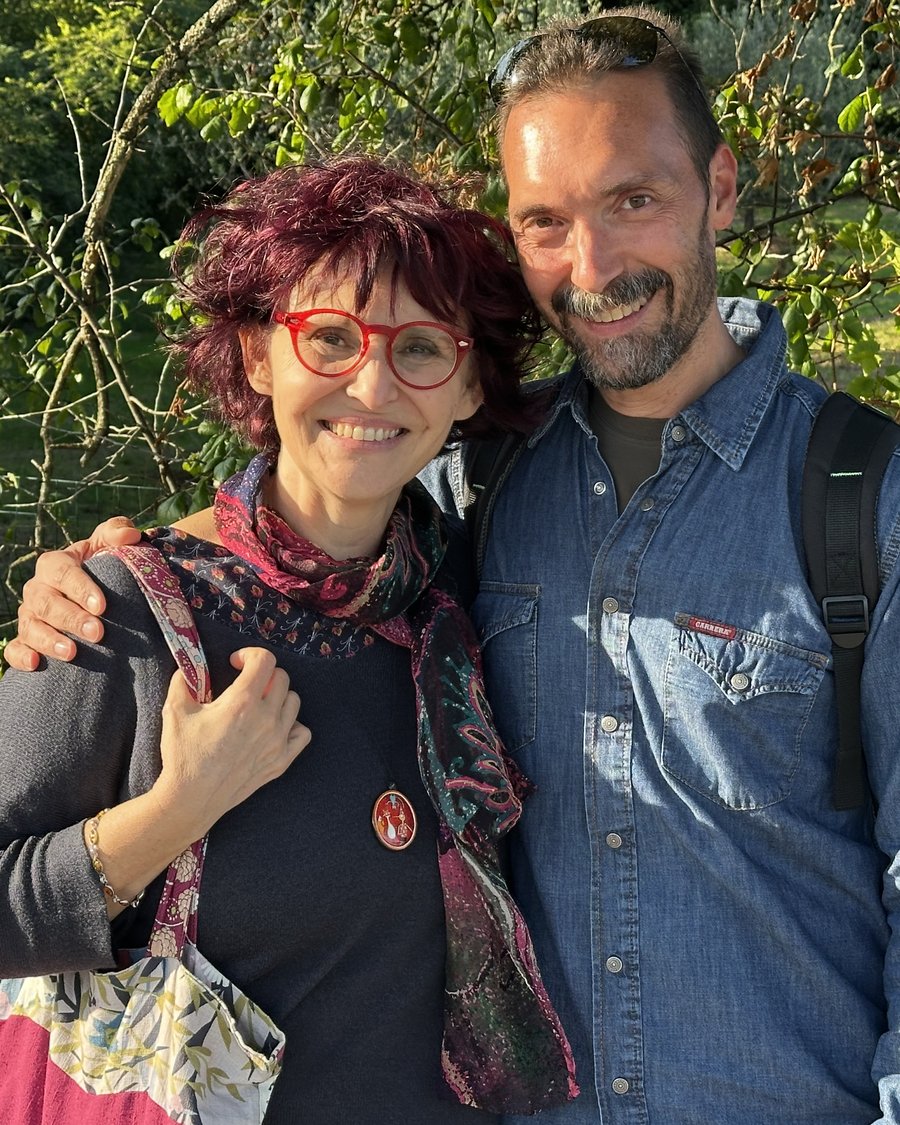
I thank Marco Pagliai, with whom I walked for years through observation, discussion and field work, sharing questions, doubts and moments of personal growth.

I thank Roberta Di Re, Beatrice Depasquale, Flaminia Bologna and Nadine De Francesco for sharing their stories and their lives with horses, agreeing to tell even the hardest parts.
I thank the professionals and researchers who over time answered my questions and helped broaden the view and the understanding.

I thank Alice Galotti, researcher and biologist, for her careful review of this book and for the valuable insights that made such a complex world clearer to the reader.

I thank Fosca Mastrandrea, natural history illustrator, for masterfully turning the key points of the book into images.

I thank my wife Laura, for her constant presence, support and patience in sharing every stage of this journey, even when it existed only as a blurred idea.

And I thank you. For your time and for supporting the documentary project. Thank you for being willing to explore our relationship with other living beings from a different point of view. In the end, we are more alike than we think.

Alberto Alessi